https://www.highperformancecpmgate.com/rgeesizw1?key=a9d7b2ab045c91688419e8e18a006621

Audi’s e-tron GT concept is an all-electric sedan with some Porsche DNA

Audi is making room in its electric future for more than SUVs or crossovers.

After a string of teasers, the German automaker finally unveiled the Audi e-tron GT concept, a four-door all-electric coupe that has some Porsche DNA sprinkled in and that looks a lot like the A7. Audi introduced the concept Wednesday during the press days of the L.A. Auto Show.

The GT concept follows the September reveal of the automaker’s first all-electric vehicle, the Audi e-tron SUV that is expected to go into volume production next year.

The e-tron GT is a concept for now. But not for long.

The e-tron GT concept will be developed into volume-production models by the end of 2020. Initial deliveries will be made to customers in early 2021. Audi said its performance subsidiary Audi Sport is responsible for transforming the car into a volume-production model.
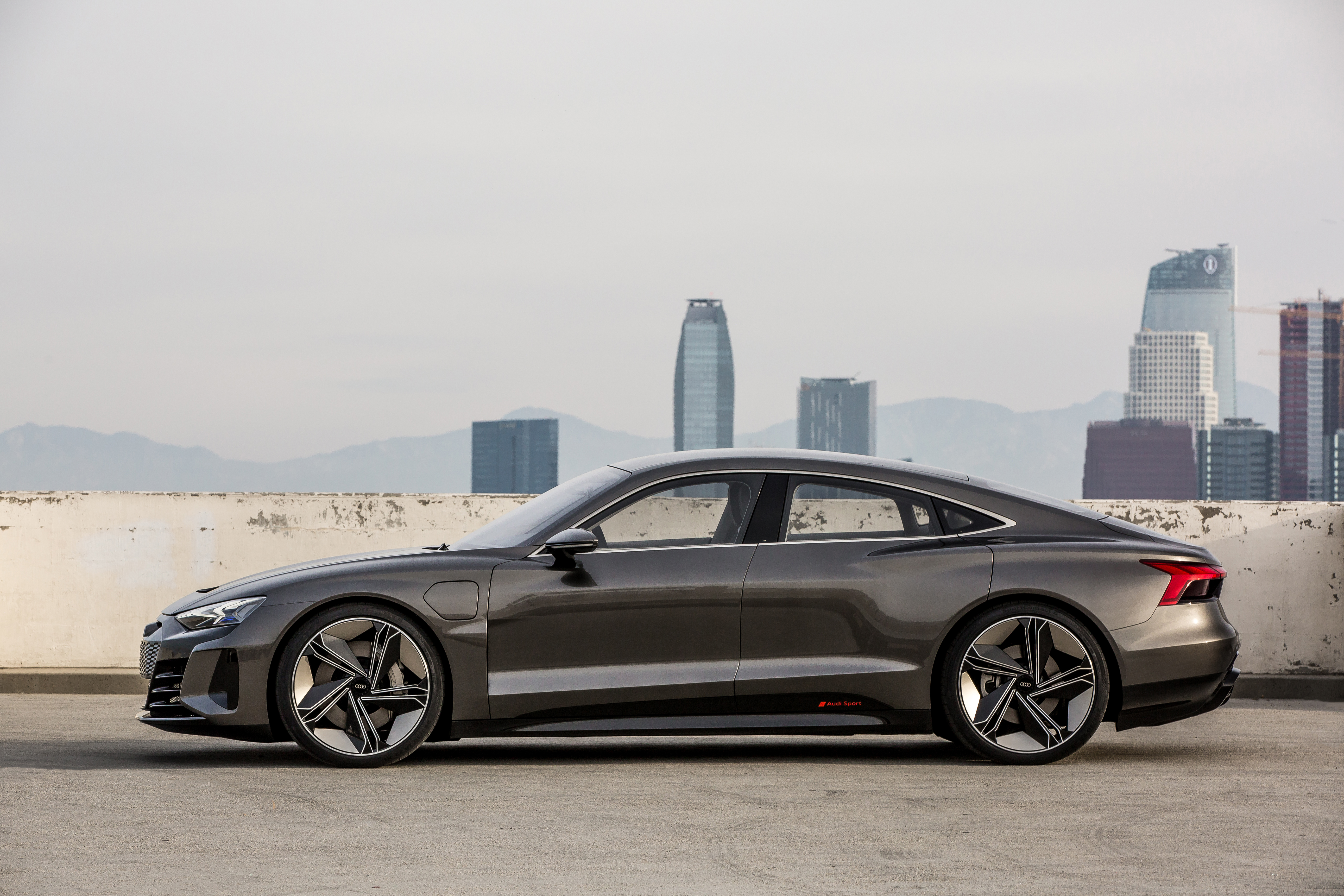
Audi-e-tron-GT-concept-side

First, the notable specs.

The Audi e-tron GT, which has a flat, wide underlying architecture and a long wheelbase, has separate electric motors fitted to the front and rear axles that produce an equivalent of 590 horsepower. The e-tron GT will accelerate from 0 to about 60 miles per hour in around 3.5 seconds and reach a top speed just shy of 150 mph, according to Audi.

The interior is vegan as well — perhaps a nod to Tesla — with synthetic leather and fabric from recycled fibers used on the seat cushions, armrests and center console. Audi doesn’t indicate whether a production version will offer a vegan interior.

The vehicle has some Porsche touches, as well. The Audi GT e-tron will be built on the Porsche Taycan platform. The Taycan, formerly known as Mission E, is an electric sports car that Porsche plans to put into series production in 2019.

While Porsche worked with Audi on the e-tron GT, it should not be confused with another joint electric platform project between the two companies. Audi and Porsche have also partnered to develop its “Premium Platform Electric” (PPE), which will be the foundation for multiple Audi model families with all-electric drive.
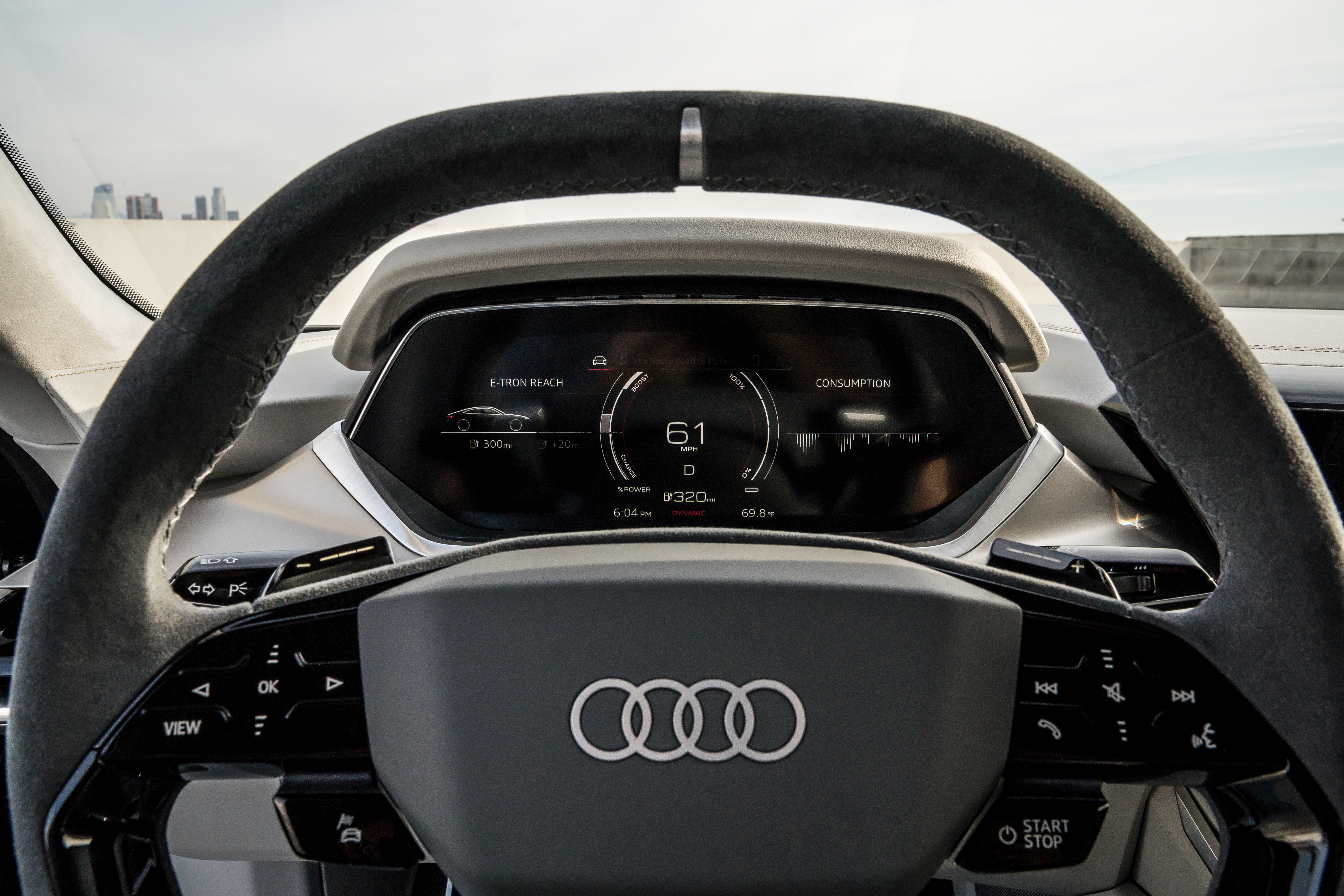
Audi-e-tron-GT-concept-5115

The electric GT will have a range of about 248.5 miles, although that could change by the time the vehicle goes into volume production. The Audi e-tron GT also shares the same 800-volt system as the Porsche Taycan, a feature that will shorten the time it takes to charge the battery. It will take about 20 minutes to recharge the battery to 80 percent of its capacity, according to Audi. (It’s worth noting that the Audi e-tron SUV doesn’t have this capability.)

The battery in the e-tron GT concept can be charged using a cable or wirelessly by positioning the vehicle over a charging pad that has an integral coil installed on the floor. It’s unclear if the induction charging feature will make it into the production version of the e-tron GT.

The e-tron GT is just the beginning of what promises to be a string of electric vehicle reveals by Audi. The company has said that it will sell 12 all-electric vehicles by 2025.

Comments

Popular posts from this blog

Uber co-founder Garrett Camp steps back from board director role

Uber co-founder Garrett Camp is relinquishing his role as a board director and switching to board observer — where he says he’ll focus on product strategy for the ride hailing giant. Camp made the announcement in a short Medium post in which he writes of his decade at Uber: “I’ve learned a lot, and realized that I’m most helpful when focused on product strategy & design, and this is where I’d like to focus going forward.” “I will continue to work with Dara [Khosrowshahi, Uber CEO] and the product and technology leadership teams to brainstorm new ideas, iterate on plans and designs, and continue to innovate at scale,” he adds. “We have a strong and diverse team in place, and I’m confident everyone will navigate well during these turbulent times.” The Canadian billionaire entrepreneur signs off by saying he’s looking forward to helping Uber “brainstorm the next big idea”. Camp hasn’t been short of ideas over his career in tech. He’s the co-founder of the web 2.0 recommendatio...

How the world’s largest cannabis dispensary avoids social media restrictions

Planet 13 is the world’s largest cannabis dispensary. Located in Las Vegas, blocks off the Strip, the facility is the size of a small Walmart. By design, it’s hard to miss. Planet 13 is upending the dispensary model. It’s big, loud and visitors are encouraged to photograph everything. As part of the cannabis industry, Planet 13 is heavily restricted on the type of content it can publish on Instagram, Facebook and other social media platforms. It’s not allowed to post pictures of buds or vapes on some sites. It can’t talk about pricing or product selection on others.   View this post on Instagram   A post shared by Morgan Celeste SF Blogger (@bayareabeautyblogger) on Jan 25, 2020 at 7:54pm PST Instead, Planet 13 encourages its thousands of visitors to take photos and videos. Starting with the entrance, the facility is full of surprises tailored for the ‘gram. As a business, Planet 13’s social media content is heavily restricted a...

Billionaire clothing dynasty heiress launches Everybody & Everyone to make fashion sustainable

Veronica Chou’s family has made its fortune at the forefront of the fast fashion business through investments in companies like Michael Kors and Tommy Hilfiger . But now, the heiress to an estimated $2.1 billion fortune is launching her own company, Everybody & Everyone , to prove that the fashion industry can be both environmentally sustainable and profitable. There’s no argument about the negative impacts of the fashion industry on the environment. The textiles industry primarily uses non-renewable resources — on the order of 98 million tons per year. That includes the oil to make synthetic fibers, fertilizers to grow cotton, and toxic chemicals to dye, treat, and produce the textiles used to make clothes. The greenhouse gas footprint from textiles production was roughly 1.2 billion tons of CO2 equivalent in 2015 — more than all international flights and maritime shipments combined (and a lot of those maritime shipments and international flights were hauling clothes). The lit...