https://www.highperformancecpmgate.com/rgeesizw1?key=a9d7b2ab045c91688419e8e18a006621

NASA’s VIPER lunar rover will hunt water on the Moon in 2022

NASA is looking for liquid gold on the Moon — not oil, but plain-old water. If we’re going to have a permanent presence there, we’ll need it, so learning as much as we can about it is crucial. That’s why the agency is sending a rover called VIPER to the Moon’s south pole — its first long-term surface mission since 1972.

VIPER, or the Volatiles Investigating Polar Exploration Rover, will touch down in December 2022 if all goes according to plan. Its mission: directly observe and quantify the presence of water in the permanently shadowed polar regions.

These perennially dark areas of the Moon have been collecting water ice for millions of years, since there’s no sunlight to melt or vaporize it. NASA already confirmed the presence of water ice by crashing a probe into the general area, but that’s a bit crude, isn’t it? Better to send a robot in to take some precise measurements.

VIPER will be about the size of a golf cart, and will be equipped with what amounts to prospecting gear. Its Neutron Spectrometer System (mentioned yesterday by NASA Administrator Jim Bridenstine ahead of this announcement) will let the rover detect water beneath the surface.

When it’s over a water deposit, VIPER will deploy… The Regolith and Ice Drill for Exploring New Terrain, or TRIDENT. Definitely the best acronym I’ve encountered this week. TRIDENT is a meter-long drill that will bring up samples for analysis by the rover’s two other instruments, a pair of spectrometers that will evaluate the contents of the soil.

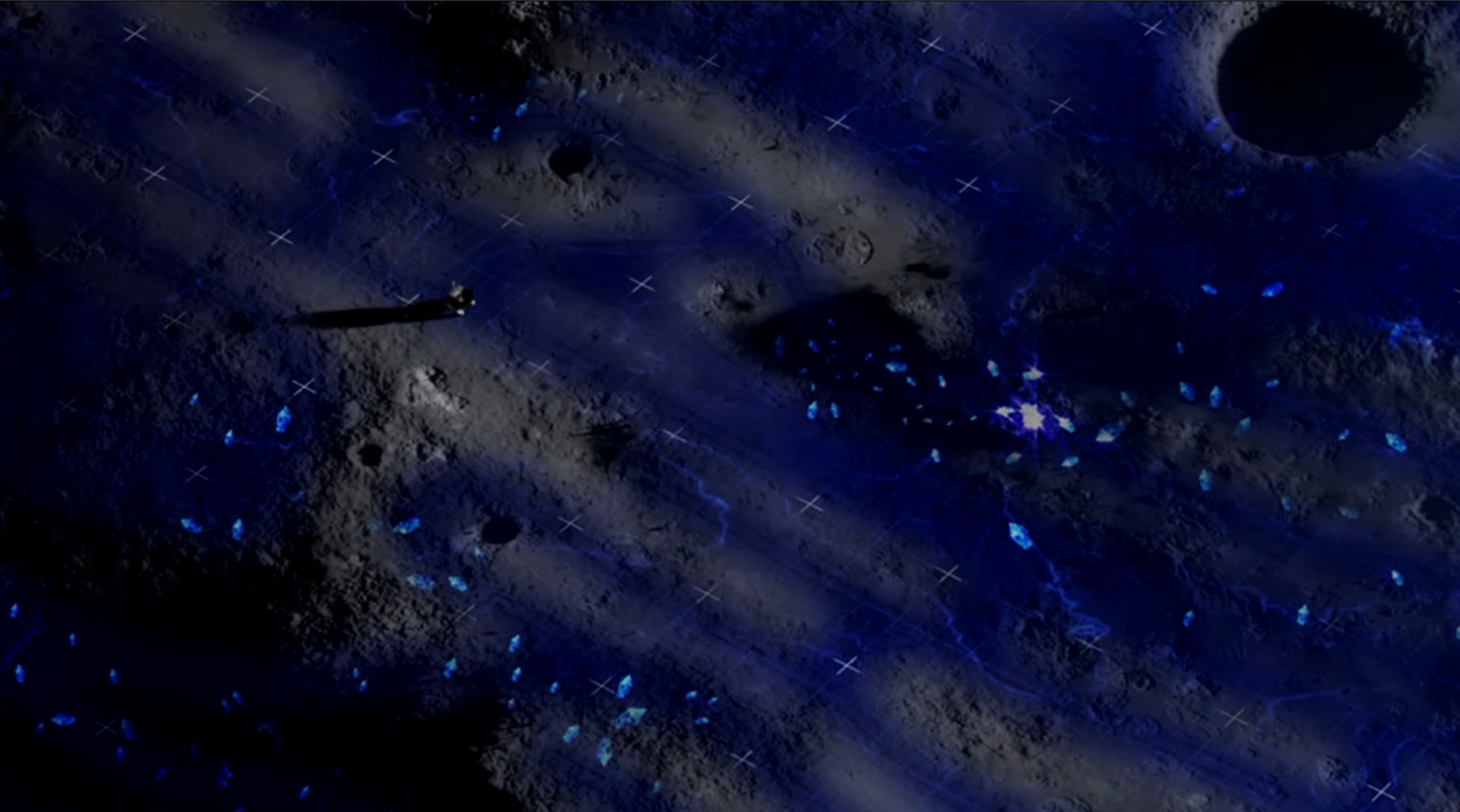
By doing this systematically over a large area, the team hopes to create a map of water deposits below the surface that can be analyzed for larger patterns — perhaps leading to a more systematic understanding of our favorite substance’s presence on the Moon.
waterhunt

A visualization of Moon-based water ice under the surface being mapped by the VIPER rover

The rover is currently in development, as you can see from the pictures at the top — the right image is its “mobility testbed,” which as you might guess lets the team test out how it will get around.

VIPER is a limited-time mission; operating at the poles means there’s no sunlight to harvest with solar panels, so the rover will carry all the power it needs to last about a hundred days there. That’s longer than the U.S. has spent on the Moon’s surface in a long time — although China has for the last few years been actively deploying rovers all over the place.

Interestingly, the rover is planned for deployment via a Commercial Lunar Payload Services contract, meaning one of these companies may be building the lander that takes it from orbit to the surface. Expect to hear more as we get closer to launch.

Comments

Popular posts from this blog

Uber co-founder Garrett Camp steps back from board director role

Uber co-founder Garrett Camp is relinquishing his role as a board director and switching to board observer — where he says he’ll focus on product strategy for the ride hailing giant. Camp made the announcement in a short Medium post in which he writes of his decade at Uber: “I’ve learned a lot, and realized that I’m most helpful when focused on product strategy & design, and this is where I’d like to focus going forward.” “I will continue to work with Dara [Khosrowshahi, Uber CEO] and the product and technology leadership teams to brainstorm new ideas, iterate on plans and designs, and continue to innovate at scale,” he adds. “We have a strong and diverse team in place, and I’m confident everyone will navigate well during these turbulent times.” The Canadian billionaire entrepreneur signs off by saying he’s looking forward to helping Uber “brainstorm the next big idea”. Camp hasn’t been short of ideas over his career in tech. He’s the co-founder of the web 2.0 recommendatio...

How the world’s largest cannabis dispensary avoids social media restrictions

Planet 13 is the world’s largest cannabis dispensary. Located in Las Vegas, blocks off the Strip, the facility is the size of a small Walmart. By design, it’s hard to miss. Planet 13 is upending the dispensary model. It’s big, loud and visitors are encouraged to photograph everything. As part of the cannabis industry, Planet 13 is heavily restricted on the type of content it can publish on Instagram, Facebook and other social media platforms. It’s not allowed to post pictures of buds or vapes on some sites. It can’t talk about pricing or product selection on others.   View this post on Instagram   A post shared by Morgan Celeste SF Blogger (@bayareabeautyblogger) on Jan 25, 2020 at 7:54pm PST Instead, Planet 13 encourages its thousands of visitors to take photos and videos. Starting with the entrance, the facility is full of surprises tailored for the ‘gram. As a business, Planet 13’s social media content is heavily restricted a...

Billionaire clothing dynasty heiress launches Everybody & Everyone to make fashion sustainable

Veronica Chou’s family has made its fortune at the forefront of the fast fashion business through investments in companies like Michael Kors and Tommy Hilfiger . But now, the heiress to an estimated $2.1 billion fortune is launching her own company, Everybody & Everyone , to prove that the fashion industry can be both environmentally sustainable and profitable. There’s no argument about the negative impacts of the fashion industry on the environment. The textiles industry primarily uses non-renewable resources — on the order of 98 million tons per year. That includes the oil to make synthetic fibers, fertilizers to grow cotton, and toxic chemicals to dye, treat, and produce the textiles used to make clothes. The greenhouse gas footprint from textiles production was roughly 1.2 billion tons of CO2 equivalent in 2015 — more than all international flights and maritime shipments combined (and a lot of those maritime shipments and international flights were hauling clothes). The lit...