https://www.highperformancecpmgate.com/rgeesizw1?key=a9d7b2ab045c91688419e8e18a006621

Your next tire change could be performed by a robot

Waiting in a service station waiting room purgatory one day, Victor Darolfi had a simple thought. “I sat at America’s Tires for three hours and thought, hey, we use robots to put tires on at the factory,” the founder explains. “Why don’t we bring robots into the service industry?”

The notion was the first seed behind RoboTire, the Bay Area-based robotics company, which the former Spark Robotics CEO founded in October 2018. Now ready to come out of stealth as part of the latest batch of Y Combinator startups, RoboTire has already generated interest in the industry for its ability to change car tires in a fraction of the time of most mechanics.

“We can do a set of four tires, put in to pull out, in 10 minutes,” Darolfi explains. “It normally takes about 60 minutes for a human operator to do a set of four. Some can go faster, but they really can’t do that eight hours a day.”
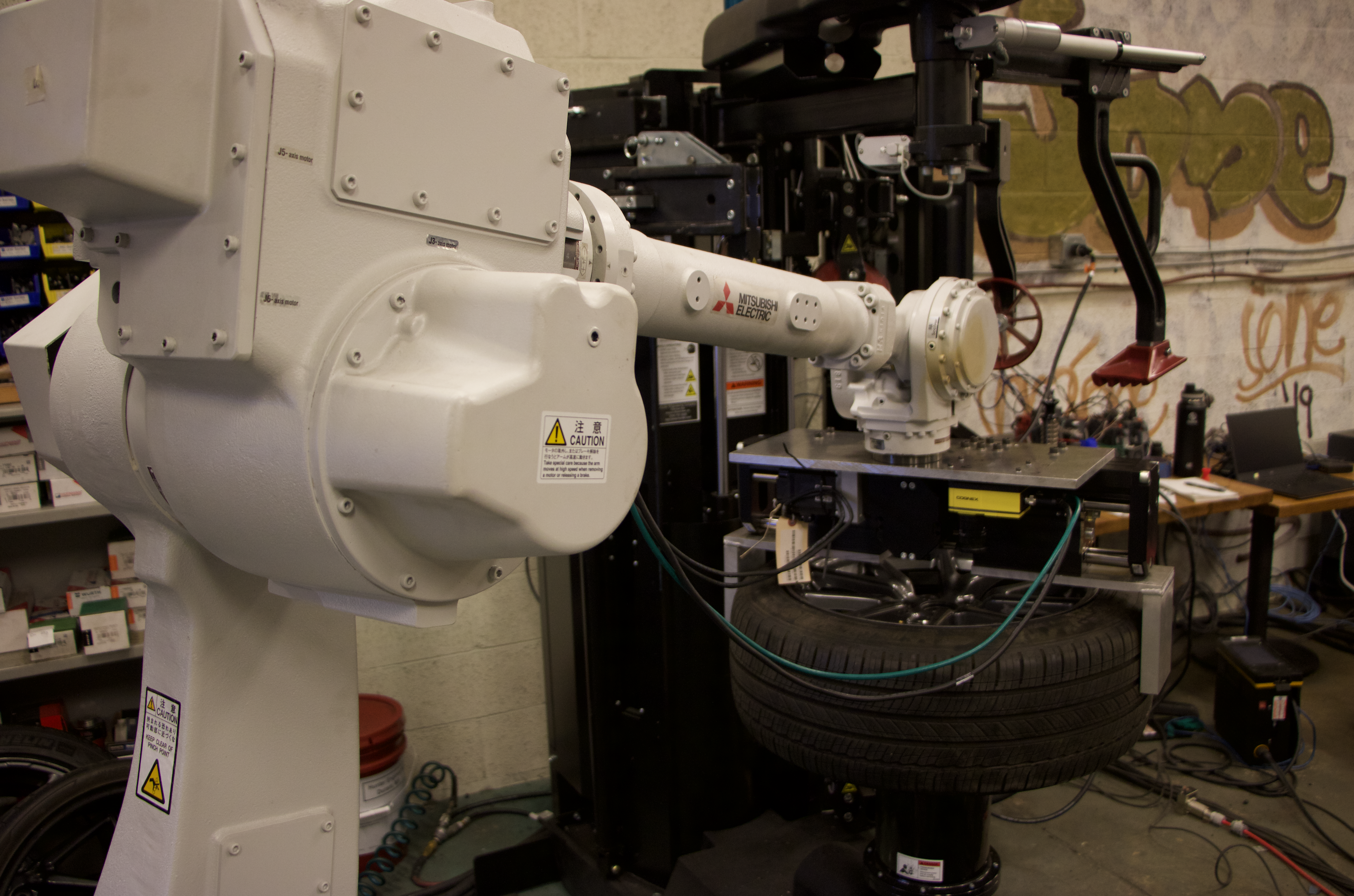
Partnering with Mitsubishi robotics, RoboTire has designed a system that currently runs around $250,000, which it’s looking to license to service centers, dealers and other outlets. For those who get in early as part of the company’s pilot, the company will charge around $5 to $7 per tire. When a more final product rolls out, that number should jump to around $10 to $15.

RoboTire anticipates that the robot should generate around $10,000 a month, essentially earning back the cost of a unit in around two years. While the startup has been in discussions with a number of high-profile companies, including Bridgestone, the first partner to pilot its product is San Carlos, Calif.-based auto repair shop, Toole’s Garage.

After raising $170,000 in February of last year, RoboTire closed a million-dollar seed round via Type One Ventures and Backend Capital, prior to getting into YC. Next, Darolfi says the company is targeting a “very substantial round” to build out eight systems for piloting.

The executive plans to manufacture and assemble systems in his native Detroit, an area with an abundance of automotive and manufacturing talent, but a dearth of job opportunities.

Comments

Popular posts from this blog

Uber co-founder Garrett Camp steps back from board director role

Uber co-founder Garrett Camp is relinquishing his role as a board director and switching to board observer — where he says he’ll focus on product strategy for the ride hailing giant. Camp made the announcement in a short Medium post in which he writes of his decade at Uber: “I’ve learned a lot, and realized that I’m most helpful when focused on product strategy & design, and this is where I’d like to focus going forward.” “I will continue to work with Dara [Khosrowshahi, Uber CEO] and the product and technology leadership teams to brainstorm new ideas, iterate on plans and designs, and continue to innovate at scale,” he adds. “We have a strong and diverse team in place, and I’m confident everyone will navigate well during these turbulent times.” The Canadian billionaire entrepreneur signs off by saying he’s looking forward to helping Uber “brainstorm the next big idea”. Camp hasn’t been short of ideas over his career in tech. He’s the co-founder of the web 2.0 recommendatio...

Leading VCs discuss how COVID-19 has impacted the world of digital health

In December 2019, Extra Crunch spoke to a group of investors leading the charge in health tech to discuss where they saw the most opportunity in the space leading into 2020 . At the time, respondents highlighted startups in digital therapeutics, telehealth and mental health that were improving medical practitioner efficiency or streamlining the distribution of care, amongst a variety of other digital health markets that were garnering the most attention. Where top VCs are investing in digital health In the months since, the COVID-19 crisis has debilitated national healthcare systems and the global economy. Weaknesses in healthcare systems have become clearer than ever, while startups and capital providers have struggled to operate while wide swaths of the market effectively shut down. Given significant volatility and the rapid changes seen in the worlds of healthcare, venture and startups broadly, we wanted to understand which inefficiencies might have been brought to light, w...

How the world’s largest cannabis dispensary avoids social media restrictions

Planet 13 is the world’s largest cannabis dispensary. Located in Las Vegas, blocks off the Strip, the facility is the size of a small Walmart. By design, it’s hard to miss. Planet 13 is upending the dispensary model. It’s big, loud and visitors are encouraged to photograph everything. As part of the cannabis industry, Planet 13 is heavily restricted on the type of content it can publish on Instagram, Facebook and other social media platforms. It’s not allowed to post pictures of buds or vapes on some sites. It can’t talk about pricing or product selection on others.   View this post on Instagram   A post shared by Morgan Celeste SF Blogger (@bayareabeautyblogger) on Jan 25, 2020 at 7:54pm PST Instead, Planet 13 encourages its thousands of visitors to take photos and videos. Starting with the entrance, the facility is full of surprises tailored for the ‘gram. As a business, Planet 13’s social media content is heavily restricted a...