The Citizenry announced today that it raised $20 million in Series B funding in partnership with NextWorld Evergreen. A direct-to-consumer home decor retailer, The Citizenry works with artisans from around the world to produce limited-edition runs of handcrafted, hand-numbered home goods. In October, The Citizenry opened its first brick-and-mortar store in New York City, and with this round of funding, The Citizenry hopes to accelerate its development into a whole-home brand.
Co-Founder Rachel Bentley got her start at Bain & Company, where she worked in strategy consulting in global supply chains.
“I saw a lot of the challenges that were coming as a result of that, tied to income inequality, human rights, and the environment,” Bentley told TechCrunch. “But I also saw the tremendous opportunity that connections of global supply chains can create to hopefully move communities forward.”
Bentley and fellow co-founder Carly Nance, a brand strategist, noticed that there was a gap in the market for premium, thoughtfully crafted home goods. They took the leap to leave their corporate jobs to start The Citizenry with the aim to make a positive global impact and set more socially conscious standards for the home decor industry.
These are lofty goals, but Bentley’s experience in global supply chain strategy helped her develop a business model that prioritizes the fair treatment of workers.
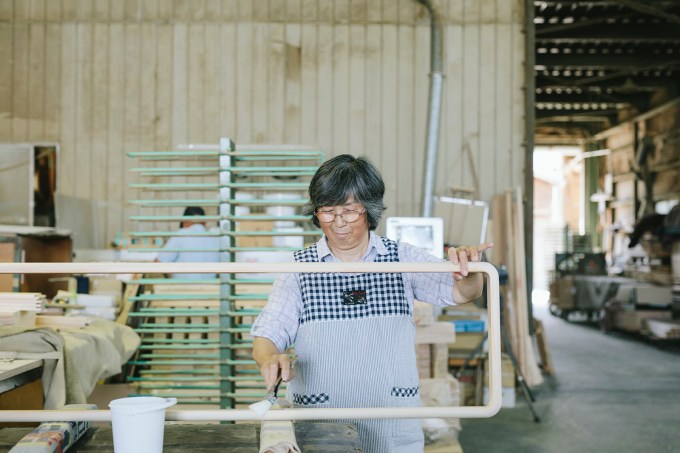
Image Credits: The Citizenry
“One of the biggest challenges in working with artisan communities is that companies are there for one season, they place a large order, and their goal is to get a really high volume at a very low price,” Bentley says. “We came in and took the opposite approach. We tried to identify groups we saw a long term potential with, that we could partner with for the next ten, twenty, fifty years, to really help grow their businesses. Having sustainable income day in and day out, not just seasonally, is where you really start to see change happen.”
The Citizenry is a member of the World Fair Trade Organization (WFTO), and for over eighteen months, they’ve been going through the process to become fully verified through the WFTO’s Guarantee System. This means that the WFTO reviews every partner and conducts several day, in-person examinations of the artisans’ working conditions. On average, The Citizenry pays its artisans double the local minimum wage.

Image Credits: The Citizenry
“Social responsibility is much more important to our generation than previous generations,” Bentley said. “We want to feel good about the way a product was made, because we know we’re going to be living with the ramifications of how it was made, whether that’s environmentally or in terms of human rights.”
Bentley says that the rise in farm-to-table food shopping is indicative of consumers’ transition in values. But spending an extra few dollars on organic produce isn’t quite the same as shelling out $695 for a Portuguese leather headboard. So, The Citizenry may not undercut retailers like IKEA, but their price points are often cheaper than luxury home competitors like Williams-Sonoma, for example. The fact that The Citizenry can even compete with larger retailers while paying livable wages to artisans is a testament to their business model.
Since closing its Series A in 2019, The Citizenry has grown sales over 200%, with repeat customers driving 45% of sales. Over the same period, the company has supported 3,000 global artisan jobs. With its Series B funding, The Citizenry hopes to expand its furniture section — the most shopped category on its website — and invest in expanding its brick-and-mortar business after its SoHo store’s successful launch.


Comments
Post a Comment