https://www.highperformancecpmgate.com/rgeesizw1?key=a9d7b2ab045c91688419e8e18a006621

YouTube revamps its mobile app with new gestures, video chapter lists, and more

YouTube today is rolling out a series of updates to its player page on mobile devices. The changes relocate some elements, add new features — like an expanded set of gesture-based navigation options — and update existing ones, like video chapters, among other things.

Video chapters were introduced in May, as an easier way to get to the “good part” of a video, without having to manually fast-forward. Instead, creators can apply timestamps to their videos that allow users to quickly jump to a specific section of a video or backtrack to rewatch a key part.

These chapters are automatically enabled as a line of timestamps and titles, based on chapter information the creator adds to their video’s description, beginning at segment 0:00.

youtube video chapters (gif)

Image Credits: YouTube

Today, YouTube is extending this feature to include a new list view that lets you see a complete list of all the chapters included in the video, each with their own preview thumbnail. You can access this list view by tapping or clicking on the chapter title in the player, then jump to the part of the video you want to see by tapping the video chapter in the list.

This make chapters easier to navigate, as the thumbnails offer a visual guide to the various parts of the video.

YouTube is also today updating its player page. To make captions more accessible, it’s moving the button to a more prominent position on mobile phones. The auto-play toggle has been moved as well, so it’s easier to turn it on or off while you’re watching a video — a change that will roll out to desktop users soon, too, YouTube says.
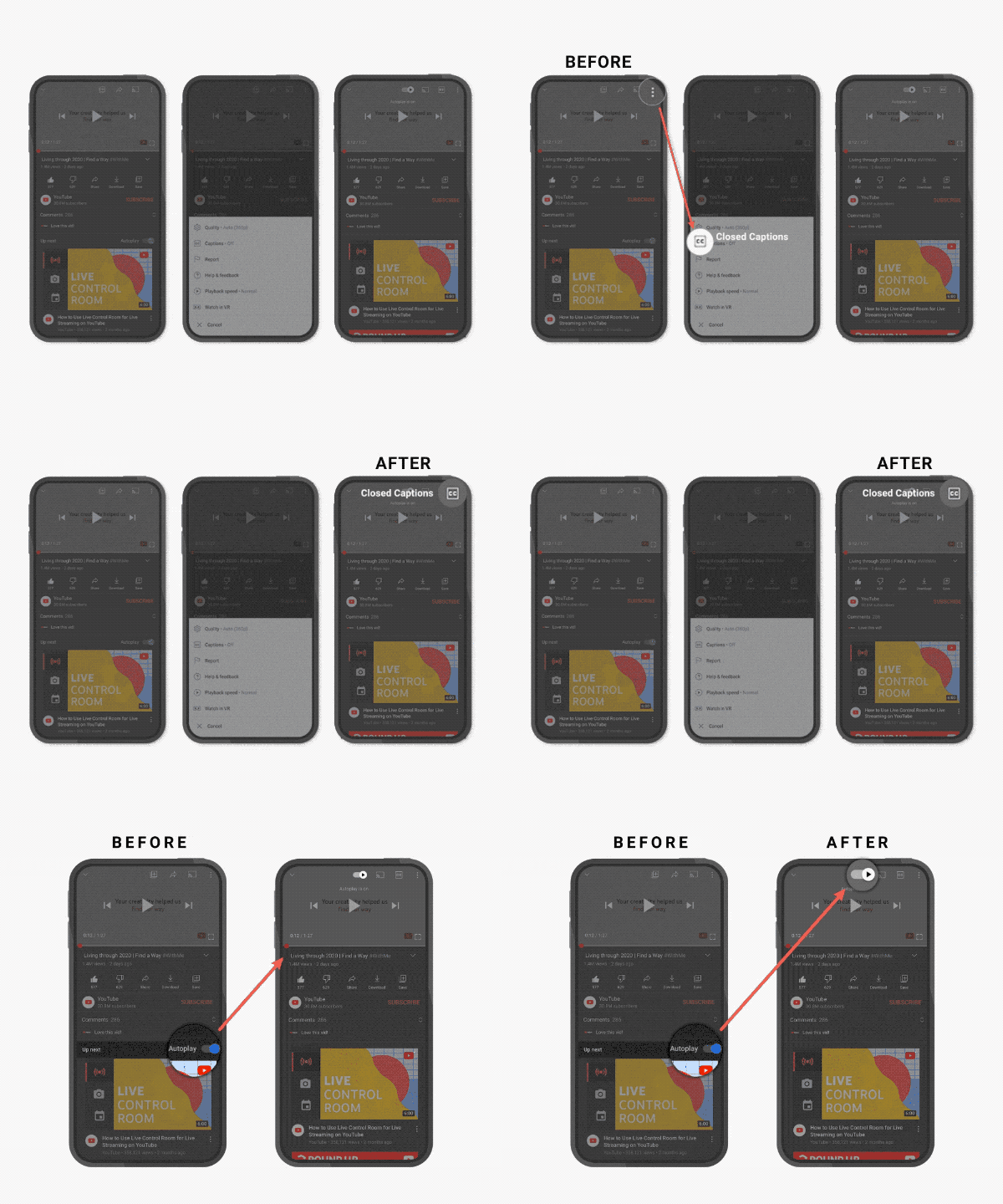
youtube caption and autoplay (gif)

Image Credits: YouTube

There are other small improvements on the new player page, including a re-arranged buttons and controls that respond to your input faster than they did before.

Along with the user interface changes, navigation has been updated to include an expanded set of gesture controls. Already, you can double tap on the left or right side of a video to either fast forward or rewind 10 seconds. Now, you’ll be able to swipe up to enter full screen mode and swipe down to exit full screen, too.
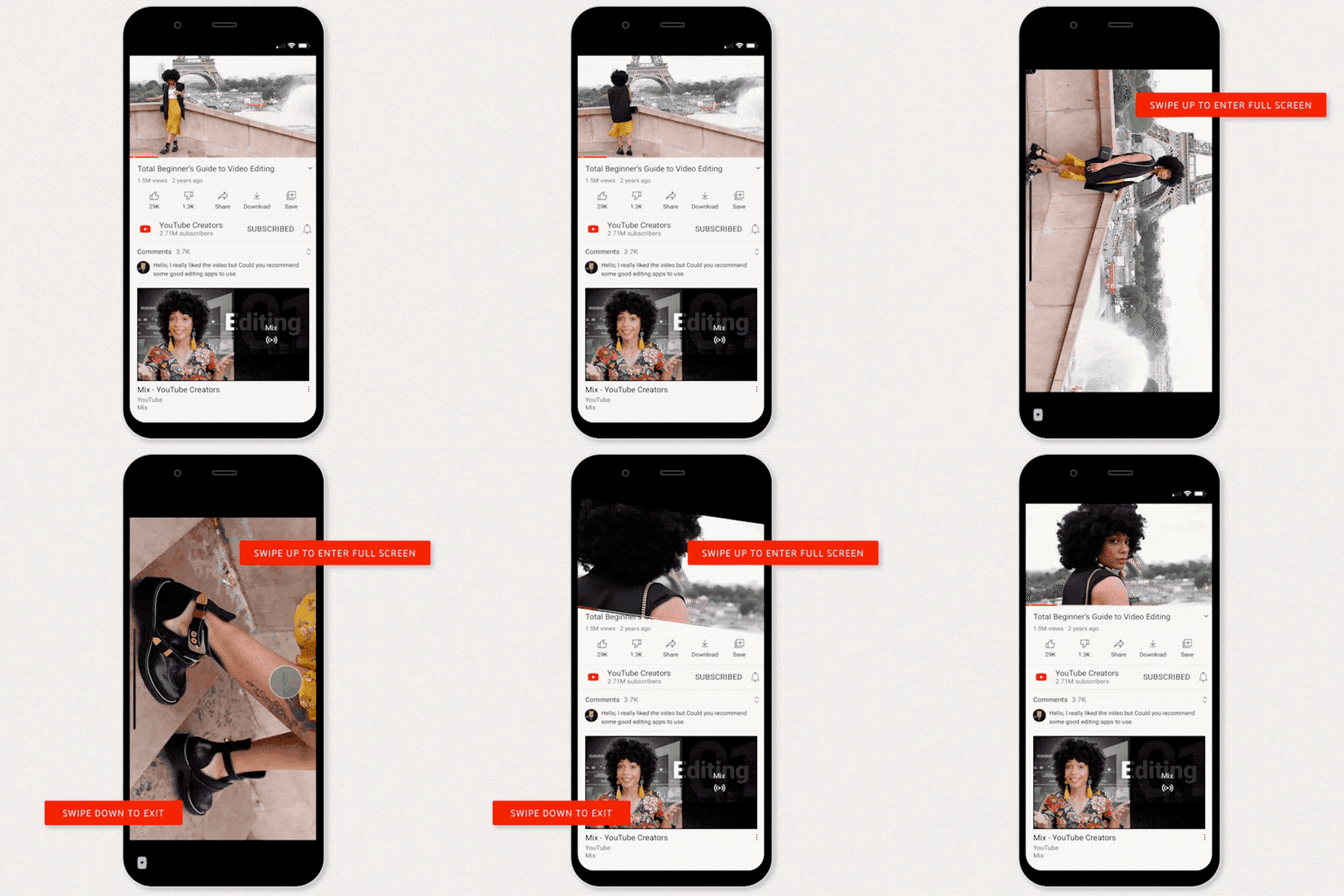
youtube gestures (gif)

Image Credits: YouTube

And if you want to see how much time is counting down versus how much time has elapsed in a video you’re watching, you can tap the timestamp to switch back and forth between these numbers.

In another change, YouTube will prompt viewers with “suggested actions” when there’s a way to have a better video experience. For example, you may be prompted to rotate your phone for a landscape video, or play a video in VR. Over time, it will roll out more suggestions, as needed.
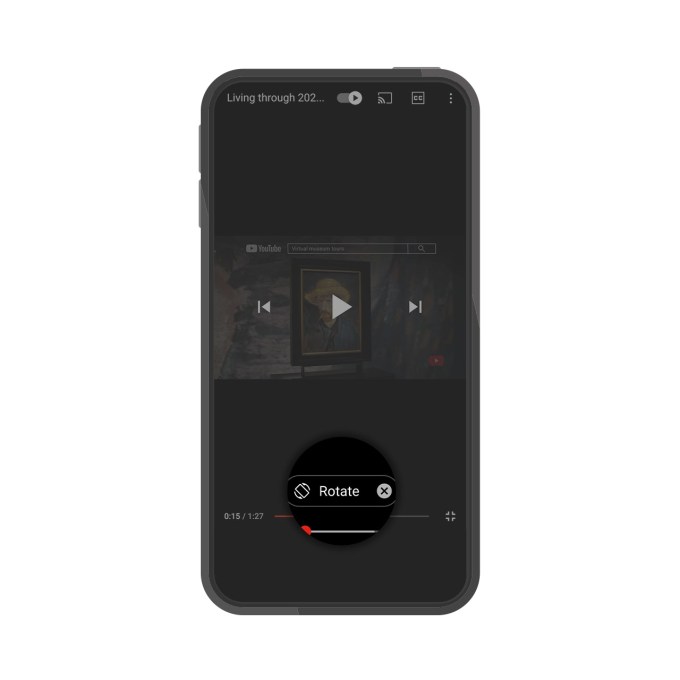
Image Credits: YouTube

In its announcement today, YouTube mentioned a bedtime reminders feature which actually launched earlier this year. It’s not clear why it was lumped in with the other changes, as it’s already live. (YouTube says it was just a “recap”).

Many of the other changes may not be new to all users, either, however. YouTube confirmed to TechCrunch that some users will already have these features at the time of the announcement, while others will receive them this week.

The updates will roll out across both iOS and Android, starting today.

Comments

Popular posts from this blog

Uber co-founder Garrett Camp steps back from board director role

Uber co-founder Garrett Camp is relinquishing his role as a board director and switching to board observer — where he says he’ll focus on product strategy for the ride hailing giant. Camp made the announcement in a short Medium post in which he writes of his decade at Uber: “I’ve learned a lot, and realized that I’m most helpful when focused on product strategy & design, and this is where I’d like to focus going forward.” “I will continue to work with Dara [Khosrowshahi, Uber CEO] and the product and technology leadership teams to brainstorm new ideas, iterate on plans and designs, and continue to innovate at scale,” he adds. “We have a strong and diverse team in place, and I’m confident everyone will navigate well during these turbulent times.” The Canadian billionaire entrepreneur signs off by saying he’s looking forward to helping Uber “brainstorm the next big idea”. Camp hasn’t been short of ideas over his career in tech. He’s the co-founder of the web 2.0 recommendatio...

How the world’s largest cannabis dispensary avoids social media restrictions

Planet 13 is the world’s largest cannabis dispensary. Located in Las Vegas, blocks off the Strip, the facility is the size of a small Walmart. By design, it’s hard to miss. Planet 13 is upending the dispensary model. It’s big, loud and visitors are encouraged to photograph everything. As part of the cannabis industry, Planet 13 is heavily restricted on the type of content it can publish on Instagram, Facebook and other social media platforms. It’s not allowed to post pictures of buds or vapes on some sites. It can’t talk about pricing or product selection on others.   View this post on Instagram   A post shared by Morgan Celeste SF Blogger (@bayareabeautyblogger) on Jan 25, 2020 at 7:54pm PST Instead, Planet 13 encourages its thousands of visitors to take photos and videos. Starting with the entrance, the facility is full of surprises tailored for the ‘gram. As a business, Planet 13’s social media content is heavily restricted a...

Billionaire clothing dynasty heiress launches Everybody & Everyone to make fashion sustainable

Veronica Chou’s family has made its fortune at the forefront of the fast fashion business through investments in companies like Michael Kors and Tommy Hilfiger . But now, the heiress to an estimated $2.1 billion fortune is launching her own company, Everybody & Everyone , to prove that the fashion industry can be both environmentally sustainable and profitable. There’s no argument about the negative impacts of the fashion industry on the environment. The textiles industry primarily uses non-renewable resources — on the order of 98 million tons per year. That includes the oil to make synthetic fibers, fertilizers to grow cotton, and toxic chemicals to dye, treat, and produce the textiles used to make clothes. The greenhouse gas footprint from textiles production was roughly 1.2 billion tons of CO2 equivalent in 2015 — more than all international flights and maritime shipments combined (and a lot of those maritime shipments and international flights were hauling clothes). The lit...