Facebook is abandoning a longstanding policy of allowing white supremacy to flourish on its platform under the guise of terms like white nationalism and white separatism.
Motherboard first reported that the decision came out of a conversation on platform moderation out of Facebook’s Content Standards Forum yesterday and will go into effect next week. Under the new rules, detailed in a Facebook Newsroom post, the company will direct users who search for content related to white supremacy to Life After Hate, an organization that helps individuals leave violent far-right groups.
As Facebook explains in its Newsroom post:
“… Over the past three months our conversations with members of civil society and academics who are experts in race relations around the world have confirmed that white nationalism and separatism cannot be meaningfully separated from white supremacy and organized hate groups. Our own review of hate figures and organizations – as defined by our Dangerous Individuals & Organizations policy – further revealed the overlap between white nationalism and separatism and white supremacy. Going forward, while people will still be able to demonstrate pride in their ethnic heritage, we will not tolerate praise or support for white nationalism and separatism.
As we wrote last year, Facebook foolishly took the distinction between white nationalism and white supremacy seriously even while most white supremacists don’t. For hate groups, hiding behind the guise of a slightly more benign term like white nationalism is a very useful way to obscure the fact that many of these superficially disparate ideologies have nearly total ideological overlap.
Last year, leaked internal documents revealed that Facebook policy formally distinguished between white supremacy and white nationalism. That misguided policy failed to see that white nationalism, white pride, and white separatism are guises for and generally synonymous with the ideals set forth by white supremacy, a dangerous form of race-motivated radicalism that inspires hate-based violence.
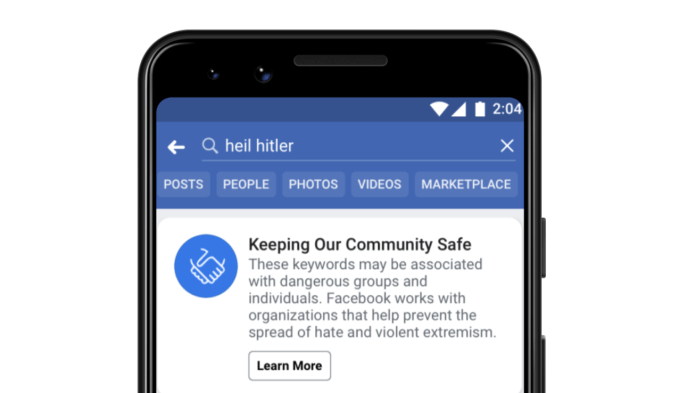
Image via Facebook
Six months ago, Facebook indicated that it would review its policy on white nationalism and white separatism after speaking with civil rights groups that decried the company’s stance toward forms of white supremacy on its platform.
“Color Of Change alerted Facebook years ago to the growing dangers of white nationalists on its platform, and today, we are glad to see the company’s leadership take this critical step forward in updating its policy on white nationalism,” Color Of Change President Rashad Robinson said of the upcoming policy shift.
“… Facebook’s update should move Twitter, YouTube, and Amazon to act urgently to stem the growth of white nationalist ideologies, which find space on platforms to spread the violent ideas and rhetoric that inspired the tragic attacks witnessed in Charlottesville, Pittsburgh, and now Christchurch.”
TechCrunch has reached out to Facebook for more details about the new policy on white nationalism and white separatism and will be following the story as it develops.
Facebook’s shift toward taking white supremacism in its many forms more seriously is a big deal. Online platforms, particularly those driven by algorithms, play a big role in funneling users toward suggested content. As long as white supremacy, under the guise of white nationalism or white separatism, has a place on major tech platforms, users expressing even passing interest in white supremacist themes and language will be funneled deeper down the radicalization rabbit hole.
Facebook has taken major strides in the last year, taking action against white supremacy-adjacent groups like the Proud Boys, which relied the platform for international recruitment. Still, it wasn’t very long ago that a simple search of a ubiquitous white supremacist term like “1488” would steer Facebook users toward a wealth of memes, posts and groups promoting violence against jews and the black community, normalizing race-based hate in the process.


Comments
Post a Comment