https://www.highperformancecpmgate.com/rgeesizw1?key=a9d7b2ab045c91688419e8e18a006621

Cycode raises $4.6M seed round to keep your source code safe

Cycode, an Israeli security company that aims to protect enterprises’ source code, today announced that it has raised a $4.6 million seed led by YL Ventures. Among others, Andy Grolnick, the former president and CEO of LogRhythm, Justin Somaini, the former CSO of SAP, and Eyal Gruner, the founder and CEO of Cynet, also participated.

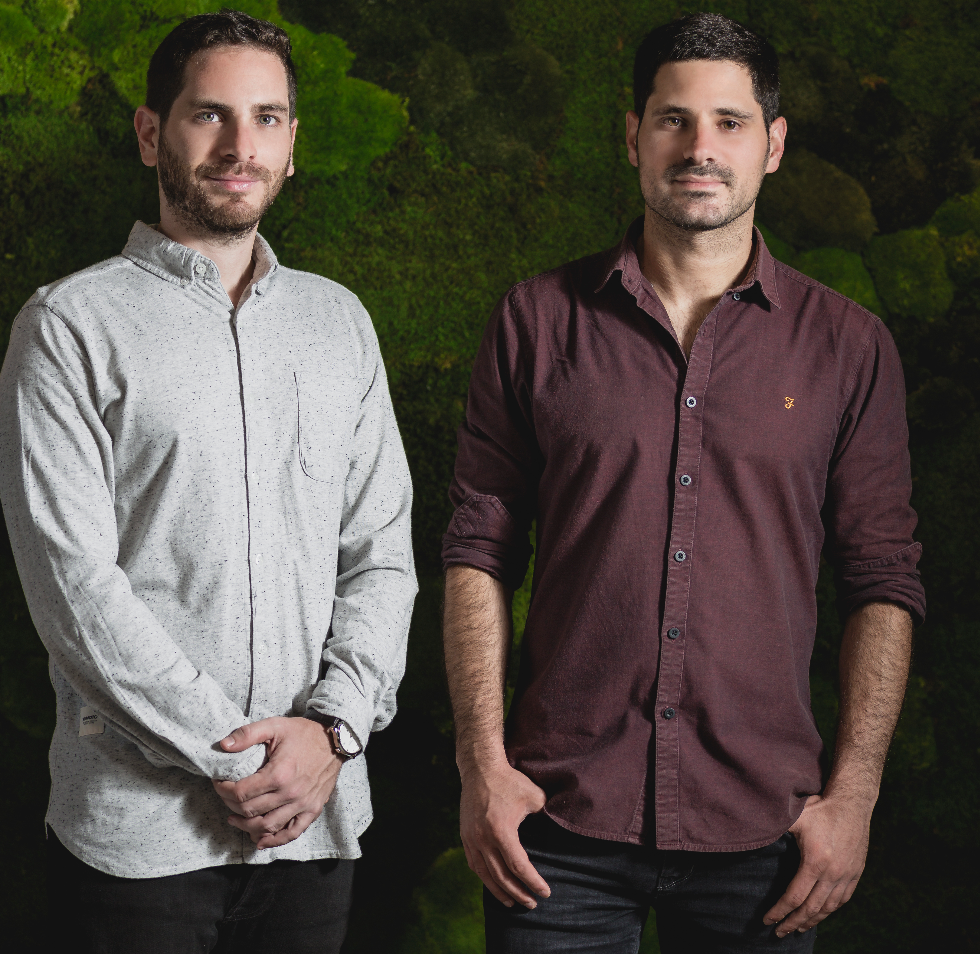
The co-founders, Lior Levy (CEO) and Ronen Slavin (CTO) argue that for most companies, source code protection remains a gap in their security posture. “We’ve seen many different security products and we came to the conclusion that current security controls and tools are just not good enough at security and protecting source code,” Levy told me. He argues that unlike with a lot of other intellectual property, you can’t just put source code in an encrypted database and enforce access roles. Source code, after all, tends to live in a lot of different places, making standard access control techniques much harder to apply.
2019 09 23 1607

Cycode co-founders Lior Levy and Ronen Slavin

Cycode then connects to different services where the source code sits, including the likes of GitHub and Bitbucket, and then tries to understand how the organization uses that code. It provides visibility into how was access to the code, how that access is used, and then automatically monitors the movement of the code while it’s looks for any anomalous behavior. The service also scans for leaks of the code across public and dark web sites.

“When Lior and Ronen approached us about this significant security gap and outlined the way many security teams were running blind to this risk, we were immediately compelled to invest in their pioneering solution to resolve it,” said Yoav Leitersdorf, managing partner at YL Ventures, who led the Cycode funding round. “Cycode’s platform is the exact type of product needed to solve this unaddressed and growing problem.”

The company currently has six employees, but as Levy told me, the plan is to use the new funding to expand to 20 employees soon and to open an office in the U.S. that will focus on sales and marketing.

Right now, the company is focusing mostly on large enterprise customers, but Levy tells me that that’s not the only market Cycode is going after, but for its initial customer base, the team is going after these large companies. He did note, though, that for most startups, security is often not the main concern (though maybe it should be?). “We feel that large enterprises feel the pain harder,” Levy said. “First of all, because of the fragmentation of the several source code management systems [they use], and secondly, because they really care about it and they really don’t see any solutions that answers all their needs on the market.”

Cycode is currently in limited availability but the team expects that the service will be generally available in 2020.

Comments

Popular posts from this blog

Uber co-founder Garrett Camp steps back from board director role

Uber co-founder Garrett Camp is relinquishing his role as a board director and switching to board observer — where he says he’ll focus on product strategy for the ride hailing giant. Camp made the announcement in a short Medium post in which he writes of his decade at Uber: “I’ve learned a lot, and realized that I’m most helpful when focused on product strategy & design, and this is where I’d like to focus going forward.” “I will continue to work with Dara [Khosrowshahi, Uber CEO] and the product and technology leadership teams to brainstorm new ideas, iterate on plans and designs, and continue to innovate at scale,” he adds. “We have a strong and diverse team in place, and I’m confident everyone will navigate well during these turbulent times.” The Canadian billionaire entrepreneur signs off by saying he’s looking forward to helping Uber “brainstorm the next big idea”. Camp hasn’t been short of ideas over his career in tech. He’s the co-founder of the web 2.0 recommendatio...

How the world’s largest cannabis dispensary avoids social media restrictions

Planet 13 is the world’s largest cannabis dispensary. Located in Las Vegas, blocks off the Strip, the facility is the size of a small Walmart. By design, it’s hard to miss. Planet 13 is upending the dispensary model. It’s big, loud and visitors are encouraged to photograph everything. As part of the cannabis industry, Planet 13 is heavily restricted on the type of content it can publish on Instagram, Facebook and other social media platforms. It’s not allowed to post pictures of buds or vapes on some sites. It can’t talk about pricing or product selection on others.   View this post on Instagram   A post shared by Morgan Celeste SF Blogger (@bayareabeautyblogger) on Jan 25, 2020 at 7:54pm PST Instead, Planet 13 encourages its thousands of visitors to take photos and videos. Starting with the entrance, the facility is full of surprises tailored for the ‘gram. As a business, Planet 13’s social media content is heavily restricted a...

Billionaire clothing dynasty heiress launches Everybody & Everyone to make fashion sustainable

Veronica Chou’s family has made its fortune at the forefront of the fast fashion business through investments in companies like Michael Kors and Tommy Hilfiger . But now, the heiress to an estimated $2.1 billion fortune is launching her own company, Everybody & Everyone , to prove that the fashion industry can be both environmentally sustainable and profitable. There’s no argument about the negative impacts of the fashion industry on the environment. The textiles industry primarily uses non-renewable resources — on the order of 98 million tons per year. That includes the oil to make synthetic fibers, fertilizers to grow cotton, and toxic chemicals to dye, treat, and produce the textiles used to make clothes. The greenhouse gas footprint from textiles production was roughly 1.2 billion tons of CO2 equivalent in 2015 — more than all international flights and maritime shipments combined (and a lot of those maritime shipments and international flights were hauling clothes). The lit...