PagerDuty, the service that helps everybody from startups to enterprises manage incidents when they inevitably arise, today announced the launch of two new features that both use the company’s machine learning smarts to help teams respond to issues faster and more efficiently.
The first of these services is Intelligent Triage, which is part of the company’s overall Event Intelligence product. The idea here is to ensure that operations teams can solve issues faster. Previously, PageDuty was already able to group alerts by type, but that was based on real-time data and without historical context. With Intelligent Triage, the service can use historical data to match what it knows about previous issues and how they were solved to a current issue, and then smartly group those issues so different teams inside a company don’t get multiple alerts from related issues but instead get actionable data on what is happening and which teams and services are affected.
“The problem we’re solving with Intelligent Triage, is all around ensuring that when one team is brought in to start addressing [an issue], they can now have visibility into other teams around them that may be working on related issues,” PagerDuty SVP of Product Jonathan Rende told me. “So other parts of the business, other parts of the teams now have this kind of broader view.”
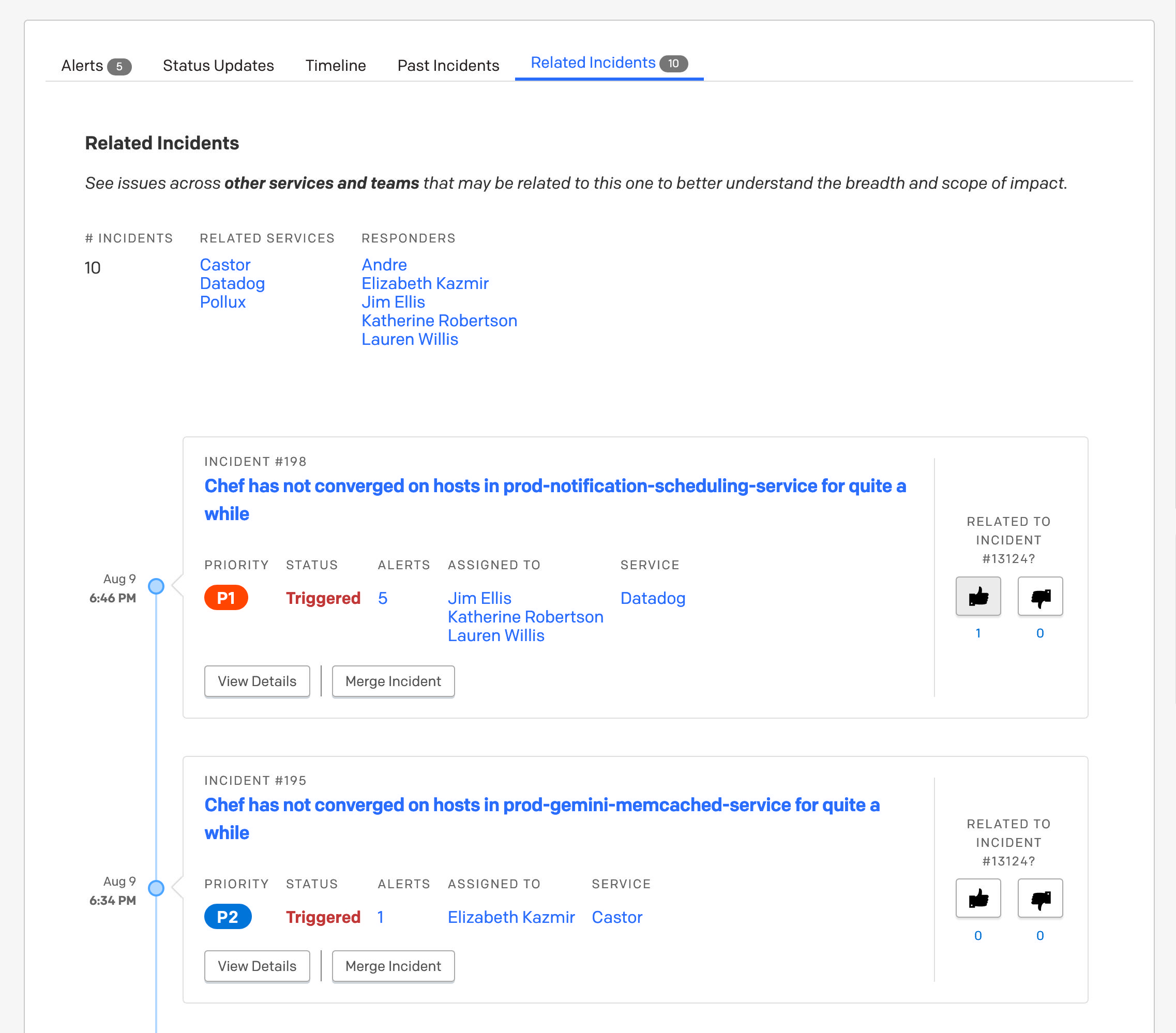
Ideally, this will help companies pull together the right people faster and minimize downtime. Indeed, the company argues that for some companies, this new triage tool can bring the average response time down from 80 minutes to 15 minutes.
In addition to Intelligent Triage, PagerDuty is also launching Intelligent Dashboards, which is part of the company’s analytics product. Rende noted that Intelligent Dashboards builds on top of the reports the service already generates to help companies understand the impact that outages and incidents have on their business (and their teams). The dashboards take this a step further by taking all of the real-time data from PagerDuty and adding a recommendation engine on top of that. “We’re not looking at the trending data for all teams and we’re making intelligent recommendations to teams on how they can mature and improve their processes,” he said. “This is really important as teams are trying to be more effective, grow their DevOps practices, but also protects the company’s revenue, protect customer experience and be able to share that with management across the organization.”
The dashboards also feature benchmarks that compare different teams inside an organization, as well as other organizations inside the same vertical.
Like other companies with access to copious amounts of data, PagerDuty, too, is clearly betting on using machine learning to solve some of its customers’ problems. “We’re making use of our data,” Rende said. “We have over 12,000 customers today and we had those customers for going on ten years, so when you look at some of the things around our intelligent dashboards, we’re pulling in that data and leverage it to help organizations mature in their transformation, in their digital journeys.”
In addition to Intelligent Triage and Dashboards, the company also today announced new integrations and partnerships with Zendesk and Salesforce Service Cloud. There’s no AI wizardry here, but instead, the focus is on giving customer service agents access to incident data so when customers call, the customer service teams can be aware of issues and provide updates without having to directly talk to the engineering team that is likely hard at work trying to restore service.


Comments
Post a Comment