https://www.highperformancecpmgate.com/rgeesizw1?key=a9d7b2ab045c91688419e8e18a006621

End Game, the startup behind Zombs Royale, raises $3M

End Game Interactive CEO Yang C. Liu has a refreshingly straightforward description of what he and his co-founder Luke Zbihlyj are up to: “We’re just building games. And to be honest, we don’t know what we’re doing.”

Despite this self-proclaimed ignorance, End Game has just raised $3 million in seed funding from an impressive group of investors: The round was led by the game-focused firm Makers Fund, with participation from Clash of Clans developer Supercell, Unity CEO David Helgason, Twitch COO Kevin Lin, Twitch VP Hubert Thieblot, Danny Epstien and Alexandre Cohen of Main Street Advisors and music executive Scooter Braun.

Liu told me that he and Zbihlyj got their start by building websites tied to existing games, such as PokéVision, a site for finding Pokémon in Pokémon GO. However, they were inspired by the success of simple, browser-based multiplayer games like Slither.io to create games of their own — first Zombs.io, then Spinz.io, then Zombs Royale.

Altogether, End Game says its titles have attracted more than 160 million players, with 1 million people playing in a single day. Zombs Royale, in particular, seems to have been a hit — the battle royale game (where a single map can pit up to 100 players against each other) was one of 2018’s most Googled games in the United States.

Liu said the team’s success convinced them to focus their efforts on game development: “Do we want to make products that people simply use, or games that people think about out when they’re going to school, or going to work, or dream about?”
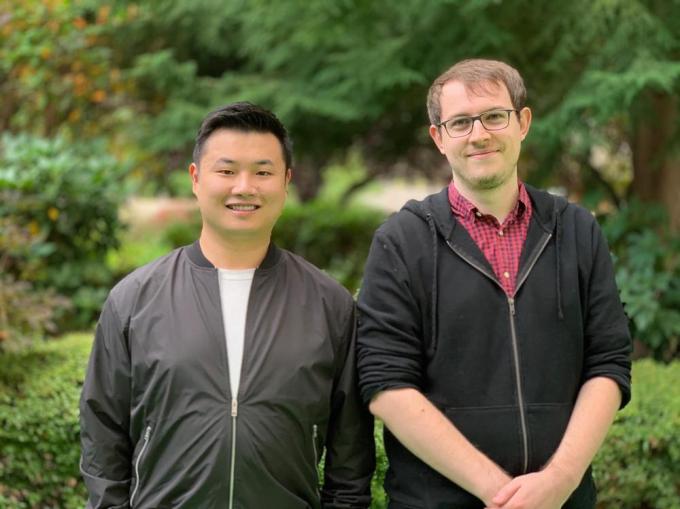
End Game founders

Zombs Royale was supposedly built in less than four weeks, but Liu said that after its launch in early 2018, the team spent most of the year maintaining and scaling the game. Then 2019 was all about building a team and creating the next game, Fate Arena, a title in the new Auto Chess genre that’s supposed to launch on PC, mobile and other platforms soon.

Liu noted that unlike End Game’s previous work, which featured simple 2D art (“On Zombs Royale and Spinz, I did the art, and it’s terrible”), Fate Arena will feature a “3D, high-fidelity art style.”

But even as the company’s games start looking a little less primitive, the goal is still to develop and iterate quickly. Liu said he hopes to fund “many tries” at building other cross-platform, multiplayer games with this seed round.

“We pride ourselves on rapid experimentation,” he said, adding that the key is “not biting off more than we can chew. We design [our games] to scale from the beginning. We don’t necessarily need to be World of Warcraft, where you need to make 100 quests as the baseline. We’re focused on games with a small starting point that can scale into something much bigger.”

Supercell Developer Relations Lead Jaakko Harlas made a similar point in a statement included in the funding announcement:

Many companies are quick to point out how fast-moving they are. Then you come across a team like this and realize what being lean and moving fast really means. Yang, Luke and the team have already shown that they can ship accessible games that showcase a real flair for fun, and we look forward to supporting them in their quest for the next big hit game.


Comments

Popular posts from this blog

Uber co-founder Garrett Camp steps back from board director role

Uber co-founder Garrett Camp is relinquishing his role as a board director and switching to board observer — where he says he’ll focus on product strategy for the ride hailing giant. Camp made the announcement in a short Medium post in which he writes of his decade at Uber: “I’ve learned a lot, and realized that I’m most helpful when focused on product strategy & design, and this is where I’d like to focus going forward.” “I will continue to work with Dara [Khosrowshahi, Uber CEO] and the product and technology leadership teams to brainstorm new ideas, iterate on plans and designs, and continue to innovate at scale,” he adds. “We have a strong and diverse team in place, and I’m confident everyone will navigate well during these turbulent times.” The Canadian billionaire entrepreneur signs off by saying he’s looking forward to helping Uber “brainstorm the next big idea”. Camp hasn’t been short of ideas over his career in tech. He’s the co-founder of the web 2.0 recommendatio...

Leading VCs discuss how COVID-19 has impacted the world of digital health

In December 2019, Extra Crunch spoke to a group of investors leading the charge in health tech to discuss where they saw the most opportunity in the space leading into 2020 . At the time, respondents highlighted startups in digital therapeutics, telehealth and mental health that were improving medical practitioner efficiency or streamlining the distribution of care, amongst a variety of other digital health markets that were garnering the most attention. Where top VCs are investing in digital health In the months since, the COVID-19 crisis has debilitated national healthcare systems and the global economy. Weaknesses in healthcare systems have become clearer than ever, while startups and capital providers have struggled to operate while wide swaths of the market effectively shut down. Given significant volatility and the rapid changes seen in the worlds of healthcare, venture and startups broadly, we wanted to understand which inefficiencies might have been brought to light, w...

News-reading app Flipboard expands local coverage, including coronavirus updates, to 12 more U.S. metros

Earlier this year, personalized news aggregation app Flipboard expanded into local news . The feature brought local news, sports, real estate, weather, transportation news and more to 23 cities across the U.S. Today, Flipboard is bringing local news to 12 more U.S. metros and is adding critical coronavirus local coverage to all of the 35 supported locales. The 12 new metros include the following:  Baltimore, Charlotte, Cleveland, Detroit, Indianapolis, Nashville, Pittsburgh, Orlando, Raleigh, Salt Lake City, St. Louis, and Tampa Bay. They join the 23 cities that were already supported:  Atlanta, Austin, Boston, Chicago, Dallas, Denver, Houston, Las Vegas, Los Angeles, Miami, Minneapolis-St. Paul, New Orleans, New York City, Philadelphia, Phoenix, Portland, Sacramento, San Diego, San Francisco Bay Area, Seattle, Toronto, Vancouver and Washington, D.C. To offer local news in its app, Flipboard works with area partners, big and small, like The Plain Dealer’s Cleveland.com , ...