https://www.highperformancecpmgate.com/rgeesizw1?key=a9d7b2ab045c91688419e8e18a006621

Tempo reveals $17M-funded $2000 weight lift training screen

Tempo wants to be the Peloton of barbells. It’s a 42-inch tall screen with 3D machine vision that tracks and teaches you as you workout. The giant upright HD display makes it feel like your personal trainer is right there with you while you compete with others in live and on-demand classes.

Tempo’s motion sensors scan you 30 times per second and notify you if your form is wrong. It’s all housed in a sleekly designed free-standing cabinet that neatly houses all the included barbell, dumbbells, attachable weights, workout mat, recovery foam roller, and workout mat.

Tempo opens for pre-orders today for $1995, requiring a $250 deposit and $39 monthly content subscription before shipping this summer.
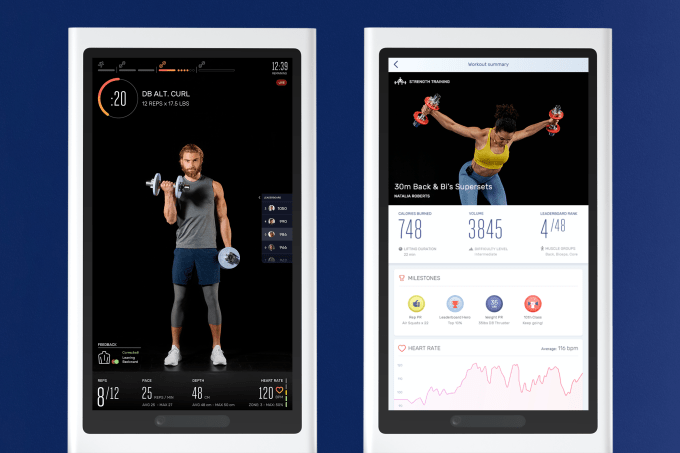
Every single product in the market took a piece of equipment out of a gym and slapped a screen on it” says Tempo CEO and co-founder Moawia Eldeeb. “You need to be able to see a user to actually be able to give them guidance so they can work out safely. We wanted to build a fitness experience from the ground up with training and form feedback at the core of it.”

I demo’d Tempo this week and found the in-home convenience, motivational on-screen personal trainers, and the real-time posture corrections gave me the confidence to lift weights without the fear of injury. It might not feel quite as fun and addictive as Peloton, but makes a facsimile of personal training more affordable than in-person classes that cost $100 or more.
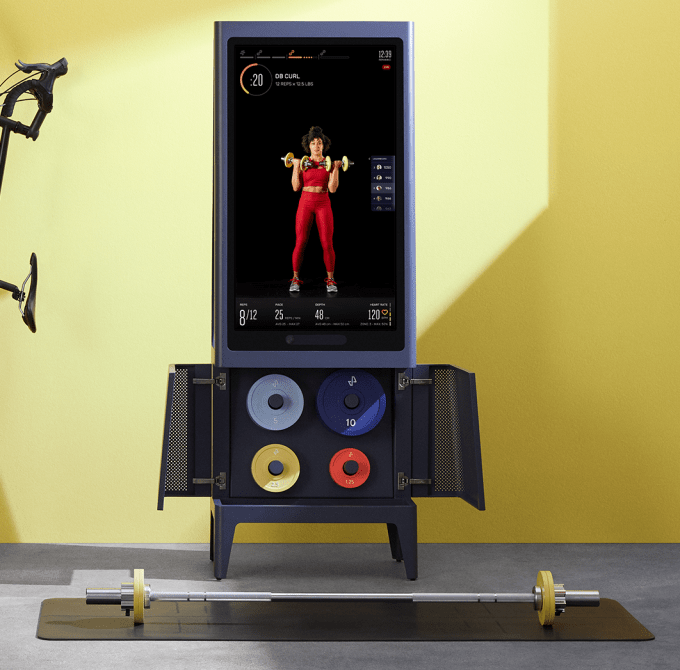
The idea of democratizing access to trainers is what convinced Eldeeb and the Tempo team to stretch its initial $1.7 million in seed funding for four years. While collecting data from its SmartSpot in-gym weight lifting assessment device, Tempo survived long enough to build this prototype. “Most investors had given up on us. We built this product and had just $700,000 left” Eldeeb recalls. But once people could try Tempo, “we pitched 10 investors and got 9 term sheets. It got very competitive.” The startup walked away with a $17.5 million round from Founders Fund, DCM, and Khosla Ventures.

For those comfortable lifting the cheap weights they have at home or hitting up a budget gym, Tempo might seem needlessly overwraught and expensive. But for anyone who needs more instruction or wants to get a Barry’s Bootcamp-worthy workout at home, Tempo might be just their speed.

Comments

Popular posts from this blog

Uber co-founder Garrett Camp steps back from board director role

Uber co-founder Garrett Camp is relinquishing his role as a board director and switching to board observer — where he says he’ll focus on product strategy for the ride hailing giant. Camp made the announcement in a short Medium post in which he writes of his decade at Uber: “I’ve learned a lot, and realized that I’m most helpful when focused on product strategy & design, and this is where I’d like to focus going forward.” “I will continue to work with Dara [Khosrowshahi, Uber CEO] and the product and technology leadership teams to brainstorm new ideas, iterate on plans and designs, and continue to innovate at scale,” he adds. “We have a strong and diverse team in place, and I’m confident everyone will navigate well during these turbulent times.” The Canadian billionaire entrepreneur signs off by saying he’s looking forward to helping Uber “brainstorm the next big idea”. Camp hasn’t been short of ideas over his career in tech. He’s the co-founder of the web 2.0 recommendatio...

Leading VCs discuss how COVID-19 has impacted the world of digital health

In December 2019, Extra Crunch spoke to a group of investors leading the charge in health tech to discuss where they saw the most opportunity in the space leading into 2020 . At the time, respondents highlighted startups in digital therapeutics, telehealth and mental health that were improving medical practitioner efficiency or streamlining the distribution of care, amongst a variety of other digital health markets that were garnering the most attention. Where top VCs are investing in digital health In the months since, the COVID-19 crisis has debilitated national healthcare systems and the global economy. Weaknesses in healthcare systems have become clearer than ever, while startups and capital providers have struggled to operate while wide swaths of the market effectively shut down. Given significant volatility and the rapid changes seen in the worlds of healthcare, venture and startups broadly, we wanted to understand which inefficiencies might have been brought to light, w...

News-reading app Flipboard expands local coverage, including coronavirus updates, to 12 more U.S. metros

Earlier this year, personalized news aggregation app Flipboard expanded into local news . The feature brought local news, sports, real estate, weather, transportation news and more to 23 cities across the U.S. Today, Flipboard is bringing local news to 12 more U.S. metros and is adding critical coronavirus local coverage to all of the 35 supported locales. The 12 new metros include the following:  Baltimore, Charlotte, Cleveland, Detroit, Indianapolis, Nashville, Pittsburgh, Orlando, Raleigh, Salt Lake City, St. Louis, and Tampa Bay. They join the 23 cities that were already supported:  Atlanta, Austin, Boston, Chicago, Dallas, Denver, Houston, Las Vegas, Los Angeles, Miami, Minneapolis-St. Paul, New Orleans, New York City, Philadelphia, Phoenix, Portland, Sacramento, San Diego, San Francisco Bay Area, Seattle, Toronto, Vancouver and Washington, D.C. To offer local news in its app, Flipboard works with area partners, big and small, like The Plain Dealer’s Cleveland.com , ...