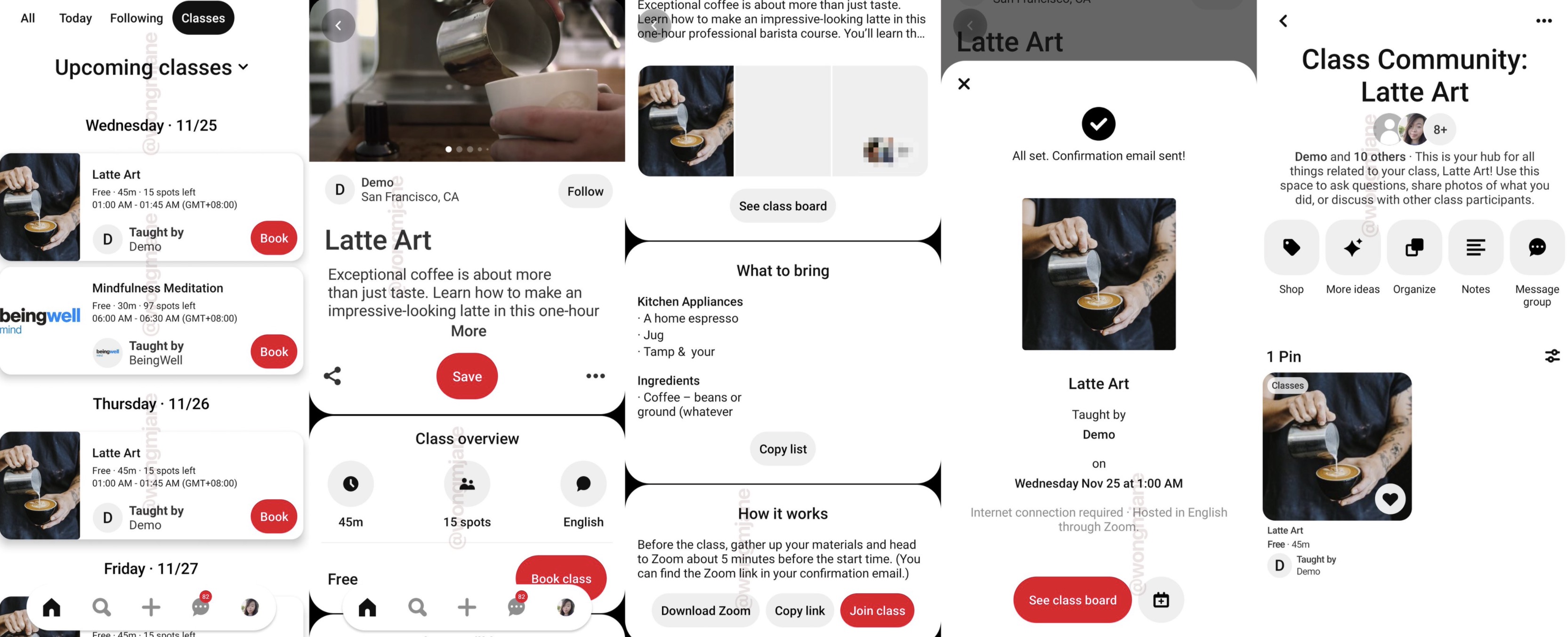
Pinterest is getting into online events. The company has been spotted testing a new feature that allows users to sign up for Zoom classes through Pinterest, while creators use Pinterest’s class boards to organize class materials, notes, and other resources, or even connect with attendees through a group chat option. The company confirmed the test of online classes is an experiment now in development, but wouldn’t offer further details about its plans.
The feature itself was discovered on Tuesday by reverse engineer Jane Manchun Wong, who found details about the online classes by looking into the app’s code.
Currently, you can visit some of these “demo” profiles directly — like “@pinsmeditation” or “@pinzoom123,” for example — and view their listed Class Communities. However, these communities are empty when you click through. That’s because the feature is still unreleased, Wong says.
When and if the feature is later launched to the public, the communities would include dedicated sections where creators will be able to organize their class materials — like lists of what to bring to class, notes, photos, and more. They could also use these communities to offer a class overview and description, connect users to a related shop, group chat feature, and more.
Creators are also able to use the communities — which are basically enhanced Pinterest boards — to respond to questions from attendees, share photos from the class, and otherwise interact with the participants.
When a user wants to join a class, they can click a “book” button to sign up, and are then emailed a confirmation with the meeting details. Other buttons direct attendees to download Zoom or copy the link to join the class.
It’s not surprising that Pinterest would expand into the online events space, given its platform has become a popular tool for organizing remote learning resources during the coronavirus pandemic. Teachers have turned to Pinterest to keep track of lesson plans, get inspiration, share educational activities, and more. In the early days of the pandemic, Pinterest reported record usage when the company saw more searches and saves globally in a single March weekend than ever before in its history, as a result of its usefulness as a online organizational tool.
This growth has continued throughout the year. In October, Pinterest’s stock jumped on strong earnings after the company beat on revenue and user growth metrics. The company brought in $443 million in revenue, versus $383.5 million expected, and grew its monthly active users to 442 million, versus the 436.4 million expected. Outside of the coronavirus impacts, much of this growth was due to strong international adoption, increased ad spend from advertisers boycotting Facebook, and a surge of interest from users looking for iOS 14 home screen personalization ideas.
Given that the U.S. has failed to get the COVID-19 pandemic under control, many classes, events and other activities will remain virtual even as we head into 2021. The online events market may continue to grow in the years that follow, too, thanks to the kickstart the pandemic provided the industry as a whole.
“We are experimenting with ways to help creators interact more closely with their audience,” a Pinterest spokesperson said, when asked for more information.
Pinterest wouldn’t confirm additional details about its plans for online events, but did say the feature was in development and the test would help to inform the product’s direction.
Pinterest often tries out new features before launching them to a wider audience. Earlier this summer, TechCrunch reported on a Story Pins feature the company had in the works. Pinterest then launched the feature in September. If the same time frame holds up for online events, we could potentially see the feature become more widely available sometime early next year.


Comments
Post a Comment