https://www.highperformancecpmgate.com/rgeesizw1?key=a9d7b2ab045c91688419e8e18a006621

E-commerce startup Little Birdie lands $30M AUD pre-launch funding from Australia’s largest bank

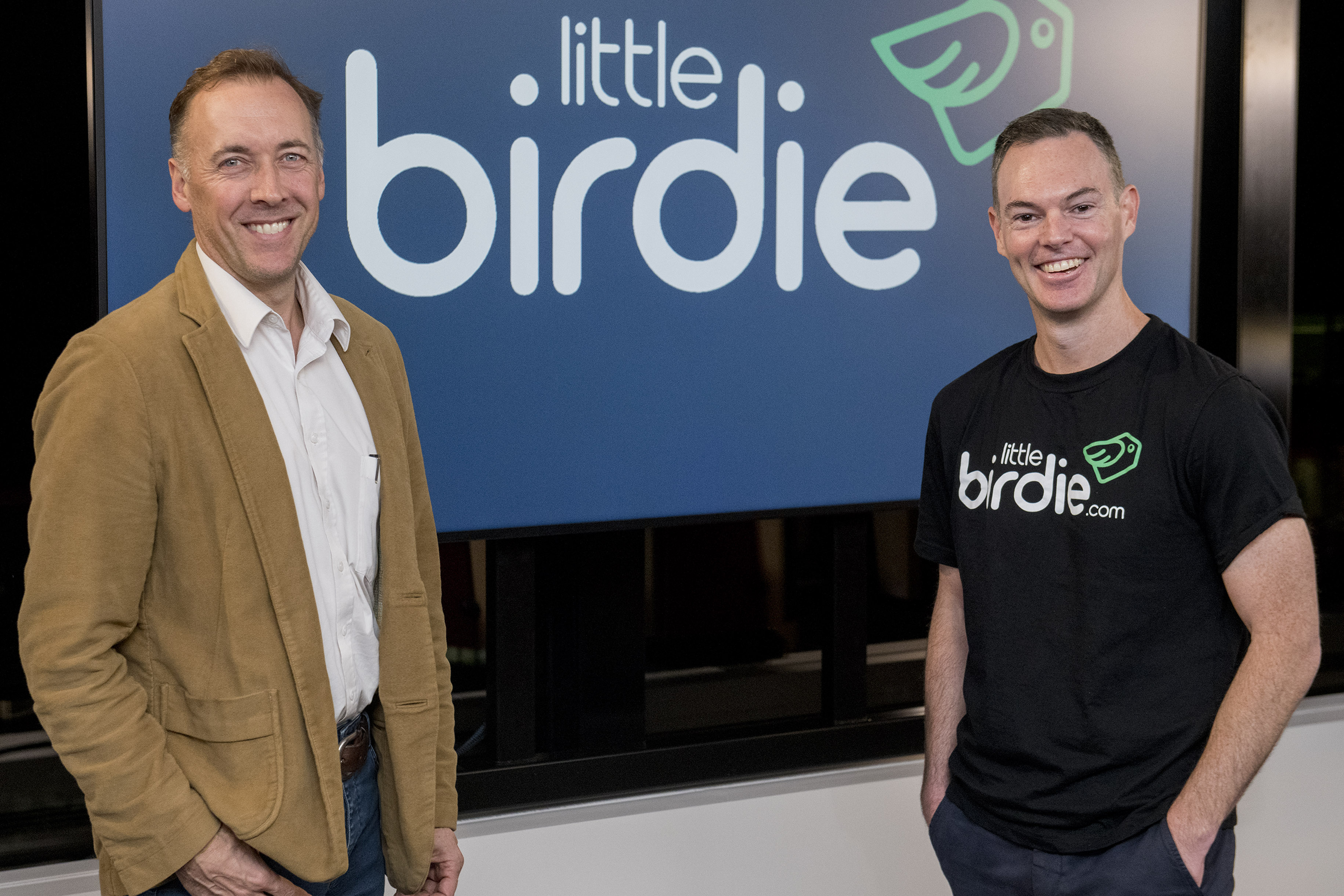
A photo of (left) Commonwealth Bank group executive Angus Sullivan and (right) Jon Beros, co-founder and CEO of Little Birdie, standing in front of Little Birdie’s logo

Commonwealth Bank group executive Angus Sullivan and Jon Beros, co-founder and CEO of Little Birdie

Melbourne-based Little Birdie, an e-commerce startup that wants to become the “new homepage of online shopping,” won’t launch until next month, but it’s already scored a major investor. Commonwealth Bank of Australia (CBA), the largest of Australia’s “Big Four” banks, has poured $30 million AUD (about $23.2 million USD) in pre-launch funding into Little Birdie, and will also integrate its shopping content, including exclusive offers, into its consumer banking app, which reaches 11 million retail customers in Australia.

Little Birdie says this brings its valuation to $130 million AUD (about $100 million USD). Compared to the United States, where Amazon is the largest e-commerce retailer by far, Australian shoppers spend more time choosing between several platforms, including large marketplaces like eBay, Gumtree, Amazon, Woolworths and a host of smaller players.

Set to launch in mid-June, Little Birdie will aggregate over 70 million products from different online brands and stores, with the goal of being the first place shoppers look when they want to buy something. Users can use Little Birdie to track and compare products, and look for price drops, sales and offers. The SKUs come from a combination of brand partnerships and scraping e-commerce sites, with the majority from retailers’ product feeds.

Co-founder and chief executive officer Jon Beros told TechCrunch that “Australia’s e-commerce market is very competitive and quite fragmented with a lot of retailers fighting for market share. The pandemic accelerated online adoption and saw many retailers switch on an online presence, or shift their focus online. With so many players fighting for the attention of shoppers and driving up the cost of acquisition, Little Birdie can genuinely help retailers by providing a new marketing channel that delivers qualified customers leads.”

Commonwealth Bank will be able to access Little Birdie’s catalog of shopping content to create targeted offers for customers, including features that link savings goals to specific items through its money management tools. Beros said that Little Birdie will also seek two different types of brand partnerships: “Firstly with retailers who come on board to promote their exclusive offers and products on Little Birdie and secondly with major brands and media companies that look to integrate our shopping content into their apps or websites. These integration partners ultimately deepen the value Little Birdie offers its retail partners by helping to amplify the reach of their offers to a wider audience.”

The company is looking at expansion into Southeast Asia and the United States, but Beros said there is not a firm timeline for its international growth yet, since it depends on the COVID-19 pandemic situation and when borders start to reopen.

In a press statement, Commonwealth Bank group executive Angus Sullivan said, “We believe customers should have access to the world’s best digital experience and our partnership with Little Birdie will give customers access to exclusive industry leading deals via the CommBank app.”

Comments

Popular posts from this blog

Uber co-founder Garrett Camp steps back from board director role

Uber co-founder Garrett Camp is relinquishing his role as a board director and switching to board observer — where he says he’ll focus on product strategy for the ride hailing giant. Camp made the announcement in a short Medium post in which he writes of his decade at Uber: “I’ve learned a lot, and realized that I’m most helpful when focused on product strategy & design, and this is where I’d like to focus going forward.” “I will continue to work with Dara [Khosrowshahi, Uber CEO] and the product and technology leadership teams to brainstorm new ideas, iterate on plans and designs, and continue to innovate at scale,” he adds. “We have a strong and diverse team in place, and I’m confident everyone will navigate well during these turbulent times.” The Canadian billionaire entrepreneur signs off by saying he’s looking forward to helping Uber “brainstorm the next big idea”. Camp hasn’t been short of ideas over his career in tech. He’s the co-founder of the web 2.0 recommendatio...

How the world’s largest cannabis dispensary avoids social media restrictions

Planet 13 is the world’s largest cannabis dispensary. Located in Las Vegas, blocks off the Strip, the facility is the size of a small Walmart. By design, it’s hard to miss. Planet 13 is upending the dispensary model. It’s big, loud and visitors are encouraged to photograph everything. As part of the cannabis industry, Planet 13 is heavily restricted on the type of content it can publish on Instagram, Facebook and other social media platforms. It’s not allowed to post pictures of buds or vapes on some sites. It can’t talk about pricing or product selection on others.   View this post on Instagram   A post shared by Morgan Celeste SF Blogger (@bayareabeautyblogger) on Jan 25, 2020 at 7:54pm PST Instead, Planet 13 encourages its thousands of visitors to take photos and videos. Starting with the entrance, the facility is full of surprises tailored for the ‘gram. As a business, Planet 13’s social media content is heavily restricted a...

Billionaire clothing dynasty heiress launches Everybody & Everyone to make fashion sustainable

Veronica Chou’s family has made its fortune at the forefront of the fast fashion business through investments in companies like Michael Kors and Tommy Hilfiger . But now, the heiress to an estimated $2.1 billion fortune is launching her own company, Everybody & Everyone , to prove that the fashion industry can be both environmentally sustainable and profitable. There’s no argument about the negative impacts of the fashion industry on the environment. The textiles industry primarily uses non-renewable resources — on the order of 98 million tons per year. That includes the oil to make synthetic fibers, fertilizers to grow cotton, and toxic chemicals to dye, treat, and produce the textiles used to make clothes. The greenhouse gas footprint from textiles production was roughly 1.2 billion tons of CO2 equivalent in 2015 — more than all international flights and maritime shipments combined (and a lot of those maritime shipments and international flights were hauling clothes). The lit...