Weeks after Amazon introduced an updated Fire TV lineup that included, for the first time, its own TVs, Roku today is announcing its own competitive products in a race to capture consumers’ attention before the holiday shopping season. Its updates include a new Roku Streaming Stick 4K and Roku Streaming Stick 4K+ — the latter which ships with Roku’s newer hands-free voice remote. The company is also refreshing the Roku Ultra LT, a Walmart-exclusive version of its high-end player. And it announced the latest software update, Roku OS 10.5, which adds updated voice features, a new Live TV channel for home screens, and other minor changes.
The new Streaming Stick 4K builds on Roku’s four-year-old product, the Streaming Stick+, as it offers the same type of stick form factor designed to be hidden behind the TV set. This version, however, has a faster processor which allows the device to boot up to 30% faster and load channels more quickly, Roku claims. The Wi-Fi is also improved, offering faster speeds and smart algorithms that help make sure users get on the right band for the best performance in their homes where network congestion is an increasingly common problem — especially with the pandemic-induced remote work lifestyle. The new Stick adds support for Dolby Vision and HDR 10+, giving it the “4K” moniker.
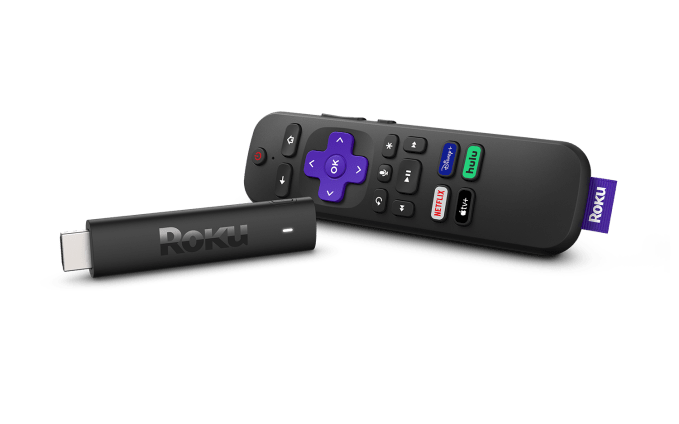
This version ships with Roku’s standard voice remote for the same price of $49.99. For comparison, Amazon’s new Fire TV Stick Max with a faster processor and speedier Wi-Fi is $54.99. However, Amazon is touting the addition of Wi-Fi 6 and support for its game streaming service, Luna, as reasons to upgrade.
Roku’s new Streaming Stick 4K+ adds the Roku Voice Remote Pro to the bundle instead. This is Roku’s new remote, launched in the spring, that offers rechargeability, a lost remote finder, and hands-free voice support via its mid-field microphone, so you can just say things like “hey Roku, turn on the TV,” or “launch Netflix,” instead of pressing buttons. Bought separately, this remote is $29.99. The bundle sells for $69.99, which translates to a $10 discount over buying the stick and remote by themselves.
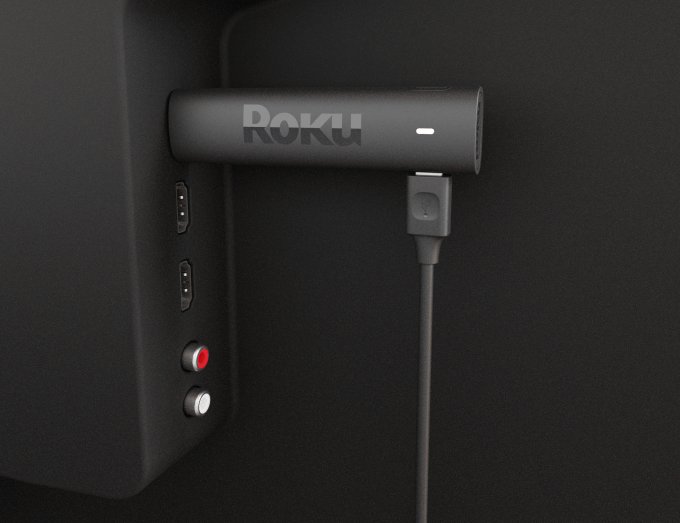
Image Credits: Roku
Both versions of the Streaming Stick will be sold online and in stores starting in October.
The Roku Ultra LT ($79.99), built for Walmart exclusively, has also been refreshed with a faster processor, more storage, a new Wi-Fi radio with up to 50% longer range, support for Dolby Vision, Bluetooth audio streaming, and a built-in ethernet port.
Plus, Roku notes that TCL will become the first device partner to use the reference designs it introduced at CES for wireless soundbars, with its upcoming Roku TV wireless soundbar. This device connects over Wi-Fi to the TV and works with the Roku remote, and will arrive at major retailers in October where it will sell for $179.99.
The other big news is Roku’s OS 10.5 software release. The update isn’t making any dramatic changes this time around, but is instead focused largely on voice and mobile improvements.
The most noticeable consumer-facing change is the ability to add a new Live TV channel to your home screen which lets you more easily launch The Roku Channel’s 200+ free live TV channels, instead of having to first visit Roku’s free streaming hub directly, then navigate to the Live TV section. This could make the Roku feel more like traditional TV for cord-cutters abandoning their TV guide for the first time.
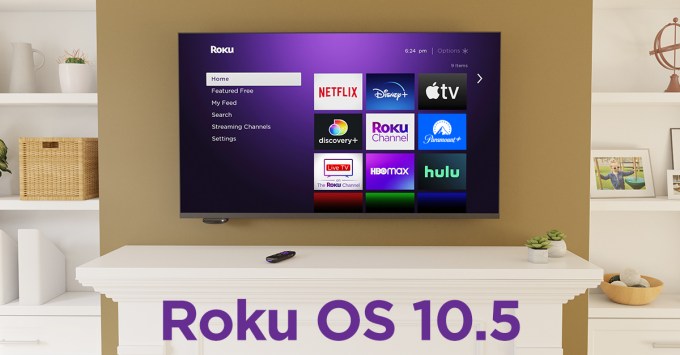
Other tweaks include expanded support for launching channels using voice commands, with most now supported; new voice search and podcast playback with a more visual “music and podcast” row and Spotify as a launch partner; the ability to control sound settings in the mobile app; an added Voice Help guide in settings; and additional sound configuration options for Roku speakers and soundbars (e.g. using the speaker pairs and soundbar in a left/center/right) or in full 5.1 surround sound system).
A handy feature for entering in email and passwords in set-up screens using voice commands is new, too. Roku says it sends the voice data off-device to its speech-to-text partner, and the audio is anonymized. Roku doesn’t get the password or store it, as it goes directly to the channel partner. While there are always privacy concerns with voice data, the addition is a big perk from an accessibility standpoint.
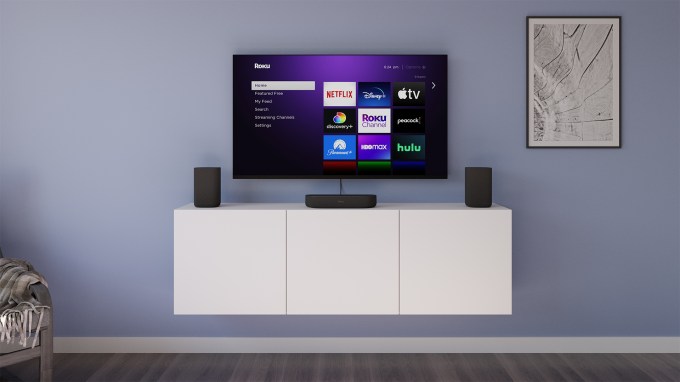
Image Credits: Roku
One of the more under-the-radar, but potentially useful changes coming in OS 10.5 is an advanced A/V sync feature that lets you use the smartphone camera to help Roku make further refinements to the audio delay when using wireless headphones to listen to the TV. This feature is offered through the mobile app.
The Roku mobile app in the U.S. is also gaining another feature with the OS 10.5 update with the addition of a new Home tab for browsing collections of movies and shows across genres, and a “Save List, which functions as a way to bookmark shows or movies you might hear about — like when chatting with friends — and want to remember to watch later when you’re back home in front of the TV.
The software update will roll out to Roku devices over the weeks ahead. It typically comes to Roku players first, then rolls out to TVs.


Comments
Post a Comment