https://www.highperformancecpmgate.com/rgeesizw1?key=a9d7b2ab045c91688419e8e18a006621

NYC subway riders will be able to swipe in with Apple Pay starting Friday

If you frequent the New York City subway’s 4, 5, 6 line, you’ve probably seen the new terminals at a variety of stations like Union Square and Grand Central. Located between turnstiles, they’ve all been sporting a curious “Test Phase/Coming Soon” screen. That finally changes this week.

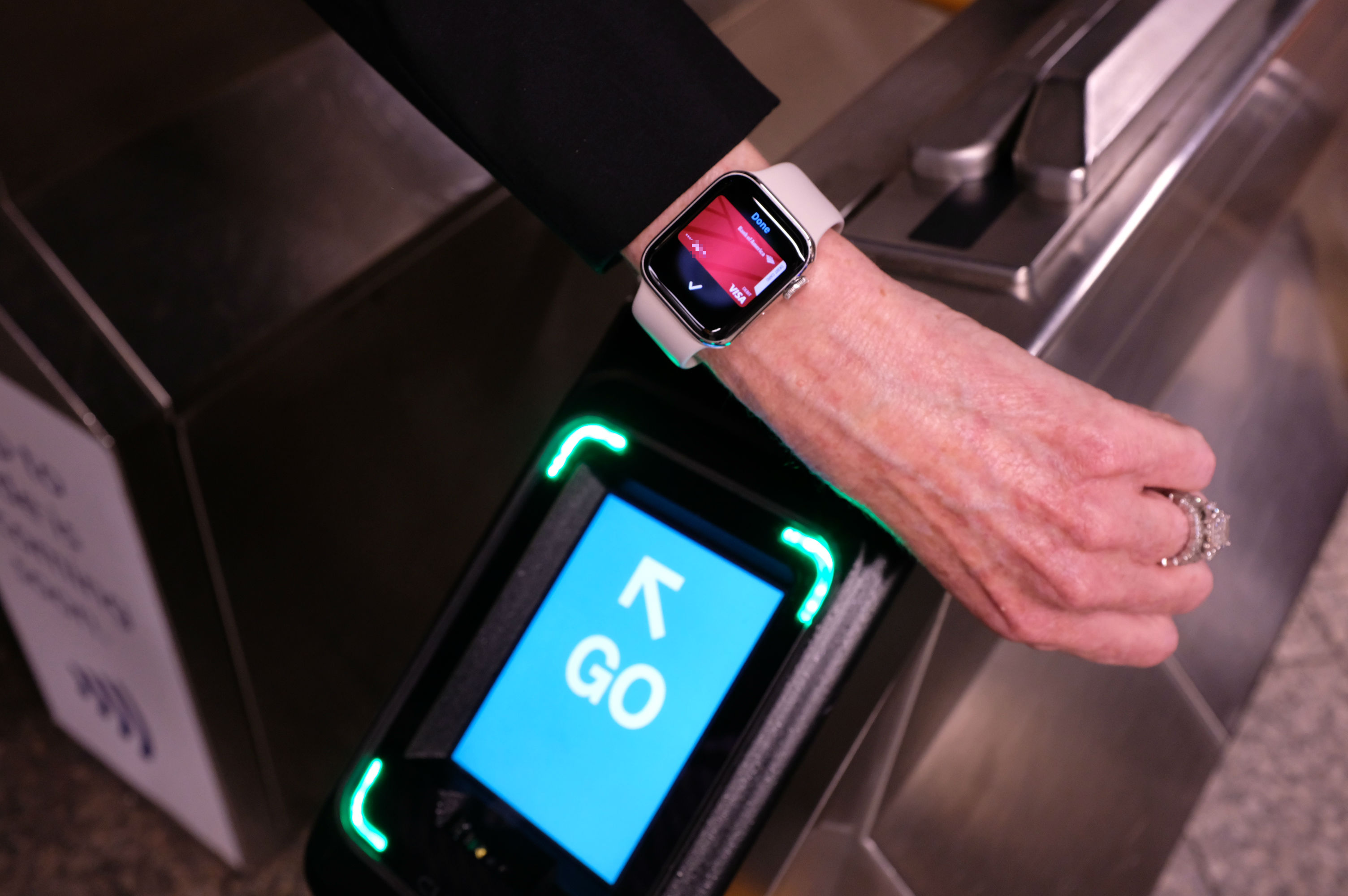
Google already announced its mobile pay solution would be arriving this week, and now its chief competitor is getting in on the action. Apple Pay is hitting select stations this Friday, May 31. When that kicks in, riders will be able to swipe their iPhone or Apple Watch to catch a ride.
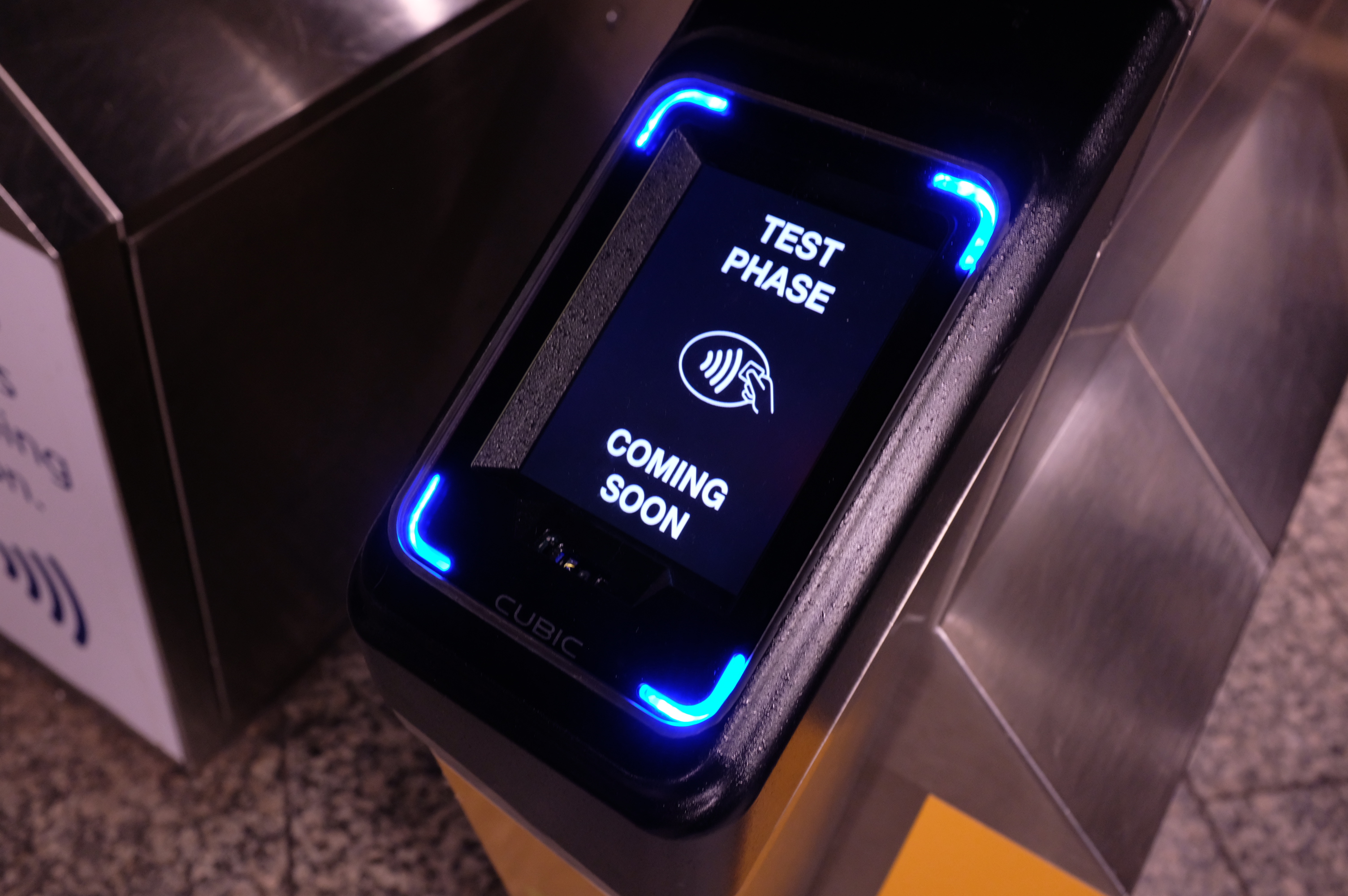
The kiosks are actually active, at present, but using them requires a software update — iOS 12.3 and watchOS 5.2.1, respectively. Then a debit or credit card needs to be associated with Express Transit in Apple Wallet, using Face or Touch ID. Once installed, it should work on the iPhone 6s and SE or later, along with the Apple Watch Series 1, 2 and 3, using NFC to get you in.

The system works as you’d expect. Hold the phone or watch up to the display and it beeps you in with a big “Go” on the screen, and a “Done” registering on the device. As long as your credit card is up to date, you should be good to go. How quickly this all works when thousands of New Yorkers are all using the system is another question entirely, of course — there tends to be a kind of learning curve with these sorts of things. And no doubt there will be a bit of a logjam at the turnstiles before the novelty of the system wears off.
Of course, that’s why this is still a kind of test period. At present, the system will be limited to the 4, 5, 6 line between Grand Central-42 Street in Manhattan and Atlantic Ave-Barclays Center in Brooklyn (16 stations in all), along with Staten Island buses. In the case of the 4, 5, 6, that’s almost certainly the most heavily trafficked stations on the most heavily trafficked subway line, so this will be an interesting sort of trial by fire.

It’s also worth noting that the system is currently limited to single-ride passes. That means those who buy daily, weekly or monthly passes (which applies to many New Yorkers, myself included) won’t be able to use the system in that capacity. More fare options are coming by late 2020, by which time the MTA expects to have rolled out Apple on all subway lines and buses, so riders will never have to worry about losing that Metro Card again.

Comments

Popular posts from this blog

Uber co-founder Garrett Camp steps back from board director role

Uber co-founder Garrett Camp is relinquishing his role as a board director and switching to board observer — where he says he’ll focus on product strategy for the ride hailing giant. Camp made the announcement in a short Medium post in which he writes of his decade at Uber: “I’ve learned a lot, and realized that I’m most helpful when focused on product strategy & design, and this is where I’d like to focus going forward.” “I will continue to work with Dara [Khosrowshahi, Uber CEO] and the product and technology leadership teams to brainstorm new ideas, iterate on plans and designs, and continue to innovate at scale,” he adds. “We have a strong and diverse team in place, and I’m confident everyone will navigate well during these turbulent times.” The Canadian billionaire entrepreneur signs off by saying he’s looking forward to helping Uber “brainstorm the next big idea”. Camp hasn’t been short of ideas over his career in tech. He’s the co-founder of the web 2.0 recommendatio...

Leading VCs discuss how COVID-19 has impacted the world of digital health

In December 2019, Extra Crunch spoke to a group of investors leading the charge in health tech to discuss where they saw the most opportunity in the space leading into 2020 . At the time, respondents highlighted startups in digital therapeutics, telehealth and mental health that were improving medical practitioner efficiency or streamlining the distribution of care, amongst a variety of other digital health markets that were garnering the most attention. Where top VCs are investing in digital health In the months since, the COVID-19 crisis has debilitated national healthcare systems and the global economy. Weaknesses in healthcare systems have become clearer than ever, while startups and capital providers have struggled to operate while wide swaths of the market effectively shut down. Given significant volatility and the rapid changes seen in the worlds of healthcare, venture and startups broadly, we wanted to understand which inefficiencies might have been brought to light, w...

News-reading app Flipboard expands local coverage, including coronavirus updates, to 12 more U.S. metros

Earlier this year, personalized news aggregation app Flipboard expanded into local news . The feature brought local news, sports, real estate, weather, transportation news and more to 23 cities across the U.S. Today, Flipboard is bringing local news to 12 more U.S. metros and is adding critical coronavirus local coverage to all of the 35 supported locales. The 12 new metros include the following:  Baltimore, Charlotte, Cleveland, Detroit, Indianapolis, Nashville, Pittsburgh, Orlando, Raleigh, Salt Lake City, St. Louis, and Tampa Bay. They join the 23 cities that were already supported:  Atlanta, Austin, Boston, Chicago, Dallas, Denver, Houston, Las Vegas, Los Angeles, Miami, Minneapolis-St. Paul, New Orleans, New York City, Philadelphia, Phoenix, Portland, Sacramento, San Diego, San Francisco Bay Area, Seattle, Toronto, Vancouver and Washington, D.C. To offer local news in its app, Flipboard works with area partners, big and small, like The Plain Dealer’s Cleveland.com , ...