Vaya Africa, a ride-hail mobility venture founded by Zimbabwean mogul Strive Masiyiwa, has launched an electric taxi service and charging network in Zimbabwe with plans to expand across the continent.
The South Africa headquartered company has acquired a fleet of Nissan Leaf EVs and developed its own solar powered charging stations.
The program goes live in Zimbabwe this week, as Vaya finalizes partnerships to begin on-demand electric taxi and delivery services in markets that could include Kenya, Nigeria, South Africa and Zambia.
“Zimbabwe is a sandbox really. We’ve moved on to doing pilots with other countries right across Africa,” Vaya Mobility CEO Dorothy Zimuto told TechCrunch on a call from Harare.
Vaya is a subsidiary of Strive Masiyiwa’s Econet Group, which includes one of Southern Africa’s largest mobile operators and Liquid Telecom, an internet infrastructure company.
Masiyiwa has become one of Africa’s Gates, Branson type figures, recognized globally as a business leader and philanthropist with connections and affiliations from President Obama to the Rockefeller Foundation.
Working with Zimuto on the Vaya EV product is Liquid Telecom’s innovation partnerships lead, Oswald Jumira.
The initiative comes as Africa’s on demand mobility market has been in full swing for several years, with startups, investors, and the larger ride-hail players aiming to bring movement of people and goods to digital product models.
Ethiopia has local ride-hail ventures Ride and Zayride. Uber’s been active in several markets on the continent since 2015 and like competitor Bolt, got into the motorcycle taxi business in Africa in 2018.
Over the last year, there’s been some movement on the continent toward developing EV’s for ride-hail and delivery use, primarily around two-wheeled transit.
In 2019, Nigerian mobility startup MAX.ng raised a $7 million Series A round backed by Yamaha, a portion of which was dedicated to pilot e-motorcycles powered by renewable energy.
Last year the Government of Rwanda established a national plan to phase out gas motorcycle taxis for e-motos, working in partnership with EV startup Ampersand.

Vaya Mobility CEO Dorothy Zimuto, Image Credits: Econet Group
The appeal of shifting to electric in Africa’s taxi market — beyond environmental benefits — is the unit economics, given the cost of fuel compared to personal income is generally high for most of the continent’s drivers.
“Africa is excited, because we are riding on the green revolution: no emissions, no noise and big savings… in terms of running costs of their vehicles,” Zimuto said.
She estimates a cost savings of 40% on the fuel and maintenance costs for drivers on the ride-hail platform.
At the moment, with fuel prices in Vaya’s first market of Zimbabwe at around $1.20 a liter, the average trip distance is 22 kilometres for a price of $19, according to Econet Group’s Oswald Jumira.
With the Nissan Leaf vehicles on Vaya’s charging network, the cost to top up will be around $5 for a range of 150 to 200 kilometres.
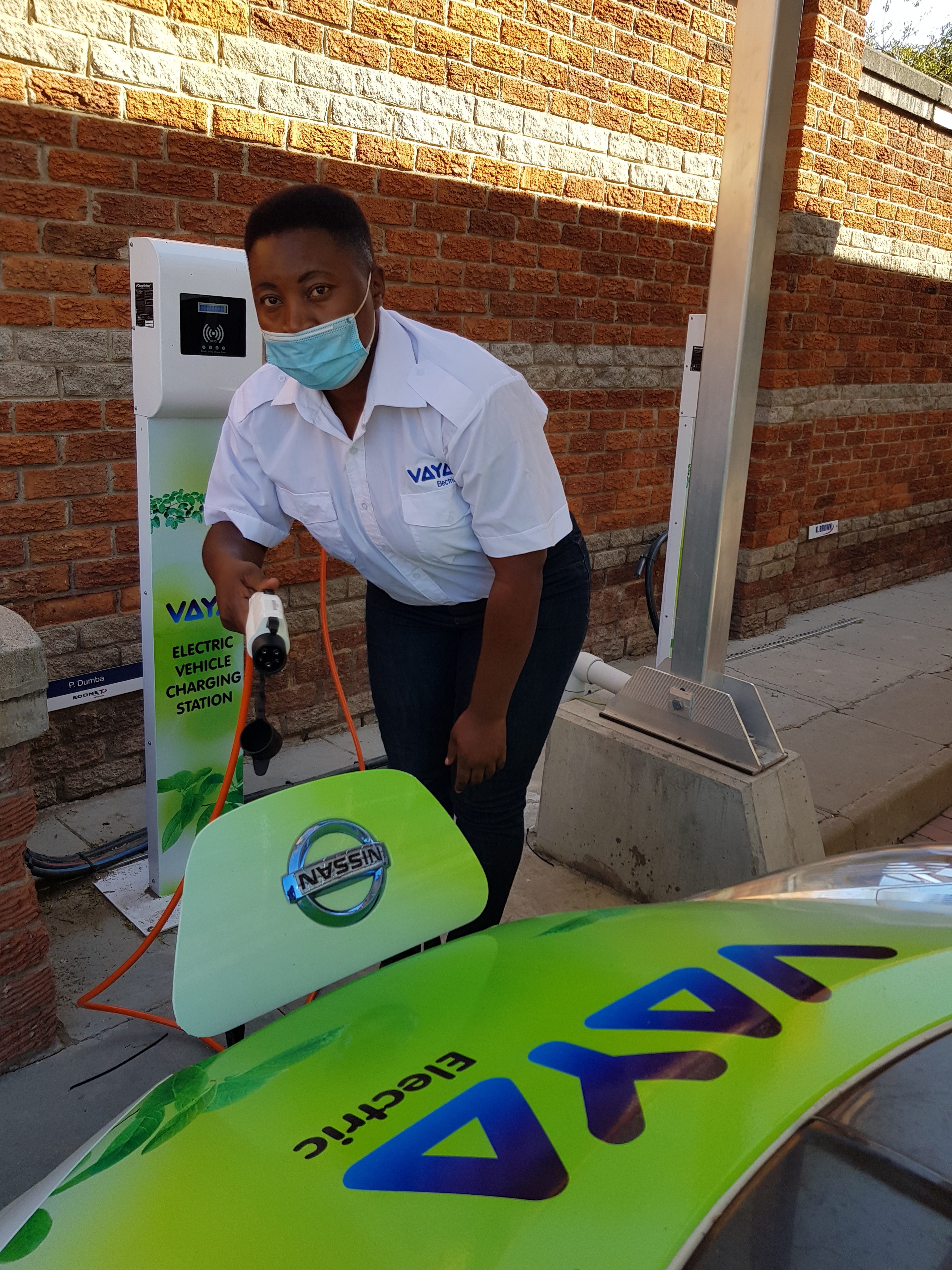
Image Credits: Vaya Africa
“It’s the driver who benefits. They take more money home. And that also means we can reduce the tariff for ride hailing companies to make it more affordable for people,” Jumira told TechCrunch.
The company has adapted its business to the spread of COVID-19 in Africa. Vaya provides PPE to its drivers and sanitizes its cars four to five times a day, according to Zimuto.
Vaya is exploring EV options for other on-demand transit applications — from delivery to motorcycle and Tuk Tuk taxis.
On the question of competing with Uber in Africa, Vaya points to the reduced fares offered by its EV program as one advantage.
The CEO of Vaya Mobility, Dorothy Zimuto, also points to certain benefits of knowing local culture and preferences.
“We speak African That’s the language we understand. We understand the people and what they want across our markets. That’s what makes the difference.” she said.
It will be something to watch if Vaya’s EV bet and local consumer knowledge translates into more passenger flow and revenue generation as it goes head to head with other ride-hail companies, such as Uber, across Africa.


Comments
Post a Comment