Walmart+ launches Sept 15, offering same-day delivery, gas discounts and cashierless checkout for $98/yr
Walmart today officially unveiled its new membership service and Amazon Prime rival, which it’s calling “Walmart+.” The $98 per year service will combine free, unlimited same-day delivery on groceries and thousands of other items, with additional benefits, like fuel discounts and access to a new Scan & Go service, similar to Walmart-owned Sam’s Club, that will allow members to check out at Walmart stores without having to wait in line.
The service will be available starting on September 15, 2020 nationwide, reaching over 4,700 Walmart stores, including 2,700 stores that offer delivery. Members can choose to pay the $98 per year after a 15-day free-trial period, or they can pay $12.95 on a month-to-month basis.
At launch, the new program promises more than 160,000 items for same-day delivery with no per-delivery fee on orders totaling $35 or more. This is the same value proposition that Walmart’s existing “Delivery Unlimited” program offers today. With the launch of Walmart+, “Delivery Unlimited” members will be moved to the rebranded and expanded service.
In addition to delivery savings, the new Walmart+ membership will include fuel discounts of up to 5 cents per gallon on any fuel type at nearly 2,000 Walmart, Murphy USA and Murphy Express stations nationwide. Walmart+ members will enable the discounts by using the Walmart mobile app, either by scanning a QR code or entering a PIN at the pump. Further down the road, the program will expand to include Sam’s Club fuel stations as well.
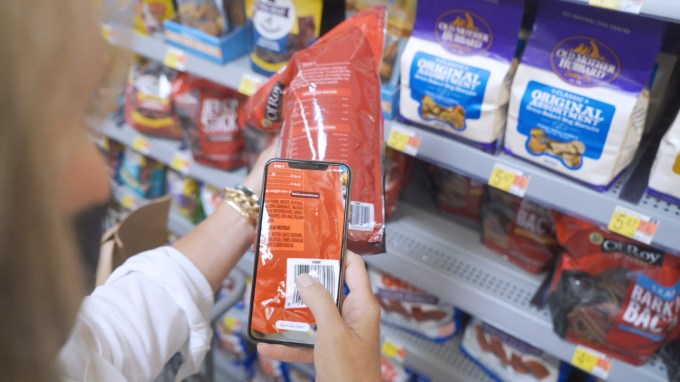
Image Credits: Walmart
The Scan & Go membership perk, meanwhile, lets Walmart+ members pay without having to wait in checkout lines — a nice perk to have amid a pandemic, where time in store means time exposed to potential carriers of the novel coronavirus. Using the Walmart app, customers scan scan items as they shop, then pay for them using Walmart Pay for a touch-free checkout experience.
Walmart two years ago had tested cashierless Scan & Go technology in its stores, but killed the program due to shopper theft. Arguably, fewer people will use Scan & Go because it’s a paid service, which could help store staff better combat the earlier problems.
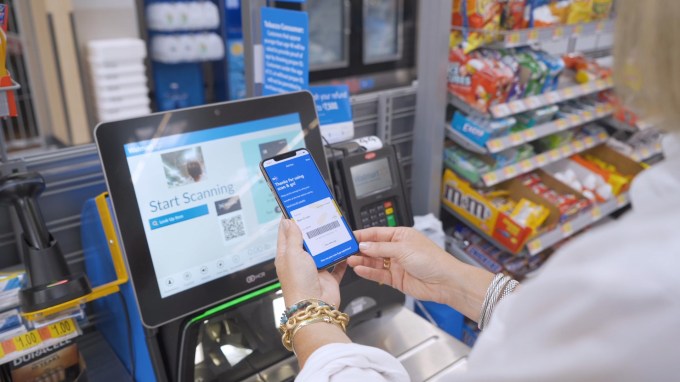
Image Credits: Walmart
As with “Delivery Unlimited,” the Walmart+ orders are picked by in-store staff then handed off to partners like Postmates, DoorDash, Roadie and Point Pickup for delivery. Not owning the end-to-end experience can cause issues for consumers, however — especially because a poor delivery experience can damage Walmart’s reputation, or because customer service issues can’t be always dealt with directly when a middleman is involved. Walmart has also seen partners come and go, as delivery services ended their relationship with Walmart over the costs involved.
Walmart claims its new program is not a Prime rival. But it could encourage some number of Prime members to make a switch.
“We’re not launching Walmart+ with the intent to compete with anything else. We’re launching it with the needs of customers in mind,” explained Walmart Chief Customer Officer Janey Whiteside.
“Of course, I hope that brings in more customers and makes them more loyal, but when you’re as big as Walmart is — and serving as many people as we are — this is about really doubling down with the customers that we have and getting more share of wallet and more share of mind,” Whiteside added.
Prime is a much more expansive program. For comparison, Prime offers tens of millions of products for two-day delivery, over 10 million for one-day delivery and over 3 million for same-day delivery on orders of $35 or more. Walmart+ is focused more specifically on same-day delivery, as Walmart.com already offers free one-day or two-day shipping on orders of $35 or more without requiring a membership fee.
Prime today also offers a huge array of other perks — like access to free music, video, audiobooks, Kindle books and more. Walmart+ does not.
Still, for many customers, the value in Prime is rooted in its promise of speedy delivery. But at the same time, Amazon has tested the limits of its customer loyalty by steadily raising Prime’s subscription price over the years to now $119 when paid annually, or $12.99 per month. Walmart+ undercuts Prime at $98 per year or $12.95 per month while largely catering to the online grocery shopper — a target market that has rapidly grown during the pandemic. Walmart recently reported the pandemic helped drive its own e-commerce sales, fueled by online grocery, up 97% in the past quarter.
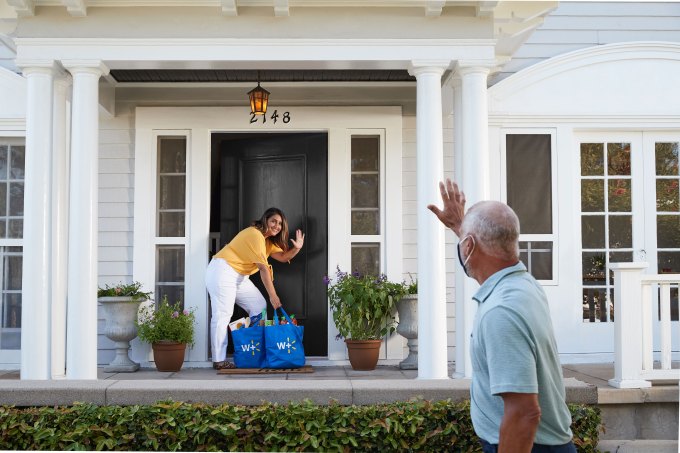
Image Credits: Walmart
Meanwhile, Amazon’s grocery strategy since its 2017 purchase of Whole Foods has yet to be streamlined. Amazon today continues to offer two different online grocery services, Amazon Fresh and Whole Foods, with a varying array of pickup and delivery options, potentially leading to consumer confusion.
That said, the pandemic has led to massive sales increases for Amazon and Walmart, along with other essential retailers like Target, with all involved reporting stellar earnings in recent quarters.
Walmart’s plans for a new subscription program had previously been reported and a placeholder website has also been live for some time. In August, Walmart CEO Doug McMillon told investors on the company’s earnings call that it was readying the launch a membership program that would be centered around delivery. He noted also at the time how Walmart’s existing “Delivery Unlimited” subscription, launched last year, would serve a “great base of an offer” for the broader program, but didn’t offer a launch time frame.
Earlier reports said the service would include other perks, like access to more grocery time slots, promotional deals and eventually a Walmart+ credit card. The retailer declined to speak to its plans, only saying that Walmart+ benefits would expand over time.
“As is the case with any great membership offering, these benefits are not intended to be static. We will continue to leverage our assets and scale to bring solutions at unprecedented value, all while holding true to the everyday low prices that customers know they can always expect from Walmart,” Whiteside said. “In the future, we will be leveraging our wide-ranging strengths to add additional benefits for members in a range of both services and offerings,” she added.


Comments
Post a Comment