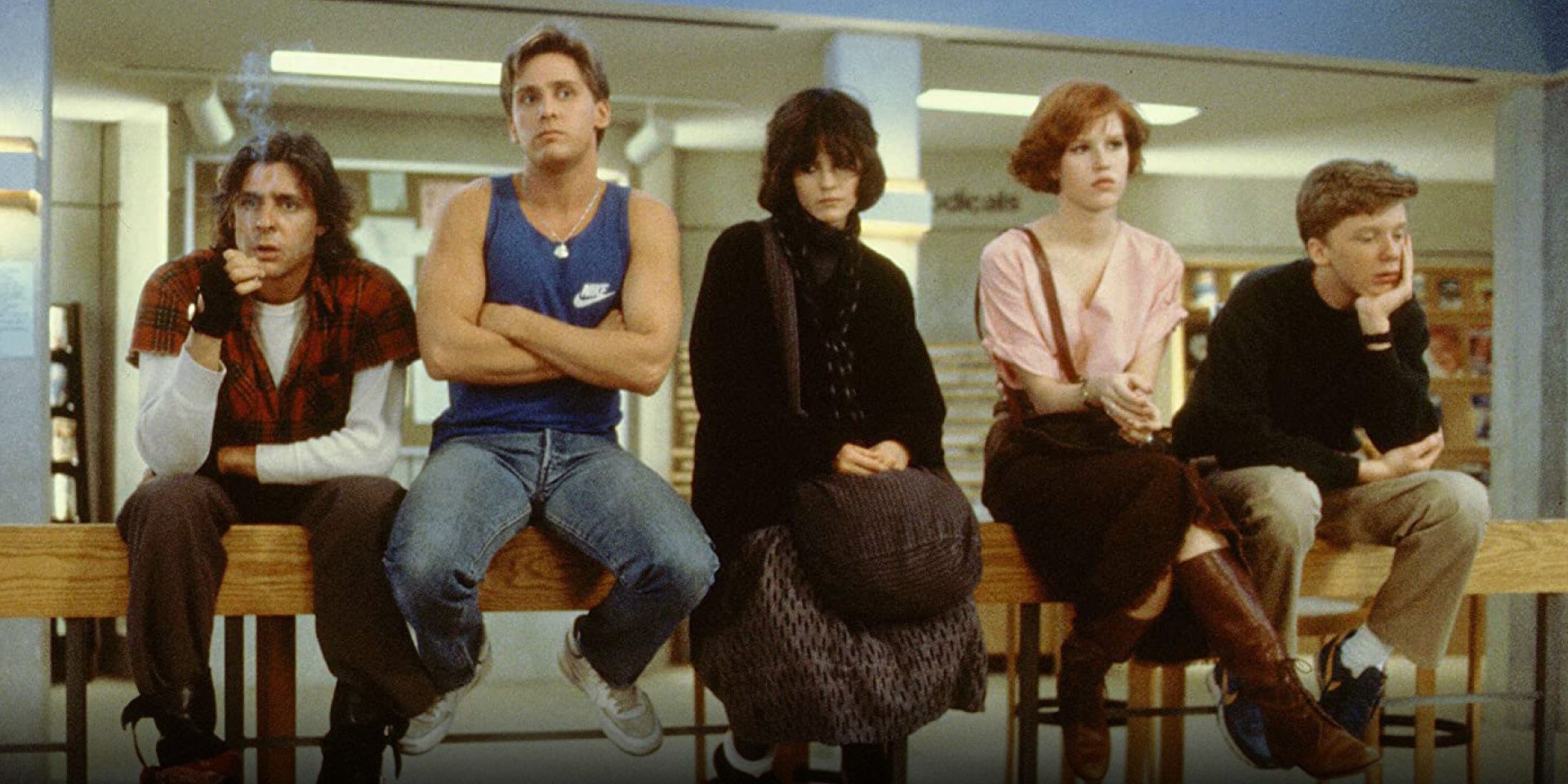
The Breakfast Club star Anthony Michael Hall says the so-called teenage friendship group, The Brat Pack, never existed. Currently celebrating his debut as Tommy Doyle in the slasher sequel Halloween Kills, some of Hall's most iconic roles hail back to his adolescence. The now 53-year-old actor formerly starred in the likes of National Lampoon's Vacation, Sixteen Candles, and Johnny Be Good.
Though he has since broken free of his more satirical roles, Hall is undoubtedly best known for his portrayal of Brian Johnson in The Breakfast Club. It was a role that kept him in close quarters with co-stars Judd Nelson, Emilio Estevez, Molly Ringwald, and Sheedy, all of whom became synonymous with the fabled "Brat Pack". Joining them under the teen-star banner were St. Elmo's Fire castmates Andrew McCarthy, Demi Moore, and then-teen-idol Rob Lowe. Throughout the 1980s this collective of teenage stars was glorified for their personal chemistry both on and off-screen. The Brat Pack label was first given life by a 1985 headline 'Hollywood's Brat Pack', which alleged that the teen stars hung out regularly off set and portrayed some of their behavior in a negative light. Several Brat Pack members have since blamed the article for typecasting them and preventing their ascension into more serious work.
Now, in an interview with Insider, Anthony Michael Hall has dismissed The Brat Pack label entirely. "It didn't exist." He goes on to point out that he was an underage teenager at the time of the article and that while his co-stars, Emilio and Judd, were in their 20s and were perhaps going out to drink together, he was not present. Hall goes on to say that he had never even met some of his alleged 'friends', including Andrew McCarthy. When the interviewer says that Hall's claim makes their childhood a lie, The Breakfast Club star answers that audiences want to believe the actors they watch are friends in real life. Read Hall's full comments, below:
"It didn't exist. It was a media ploy. Whoever was the editor of New York Magazine at the time, it was a set up. 'Let's get all these guys together and get them talking shit.' The truth is in that time frame, I was at the very young end of that group. I was literally still in high school. When we did "The Breakfast Club," Emilio and Judd were in their early 20s and they are going out and having beers and I was a teen. So when they did that article I did feel that was a ploy to get all them yapping.
"I have never met him [McCarthy]. And I also think audiences want the actors that they watch together in projects to be actually connected in life. They expect that. People will be like, 'How are Emilio and Judd?' And I'm like, 'I don't know. I haven't seen them in 14 years.'"
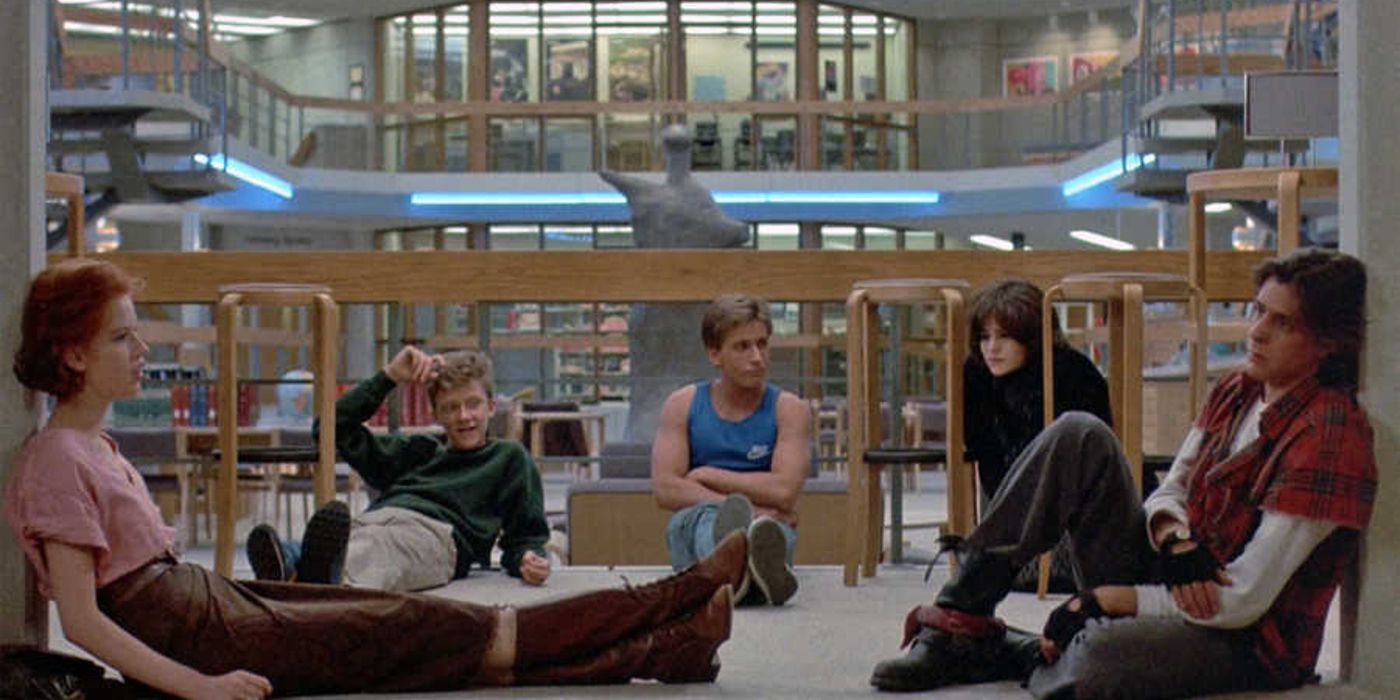
While Hall's comments might come as a surprise to some and a disappointment to others, they mark the first time that an alleged Brat Pack member has outright disparaged the friendship group's existence. Though other members haven't quite gone so far, individuals like Emilio Estevez have said that their friendships weren't as broad nor as close as the media suggested. Regardless, this latest statement might have some old fans re-evaluating their perceptions of beloved childhood actors and being more mindful of media hyperbole.
Despite the Brat Pack name following him, even now, Hall has seemingly managed to cut himself free and allowed viewers to enjoy his portrayal in more serious roles. Since 1985, some of his most notable performances have been in The Dark Knight, Foxcatcher, Live By Night, and War Machine. Even so, there will be more than a few fans of those early teenage days in The Breakfast Club, who will have eagerly and loyally awaited the release of Halloween Kills.
Comments
Post a Comment