https://www.highperformancecpmgate.com/rgeesizw1?key=a9d7b2ab045c91688419e8e18a006621

Facebook launches Avatars, its Bitmoji competitor, in India

Facebook Avatars, which lets users customize a virtual lookalike of themselves for use as stickers in chat and comments, is now available in India, the social juggernaut’s biggest market by users account.

The American firm said Tuesday it had launched Avatars to India as more social interaction moves online amid a nationwide lockdown in the world’s second largest internet market. The company said Avatars supports a variety of faces, hairstyles, outfits that are customized for users in India.

Avatars’ launch comes to India at the height of a backlash against Chinese apps in the country — some of which have posed serious competition to Facebook’s ever-growing tentacles in Asia’s third-largest economy. On Monday evening, New Delhi ordered to ban TikTok and nearly 60 other apps developed by Chinese firms.
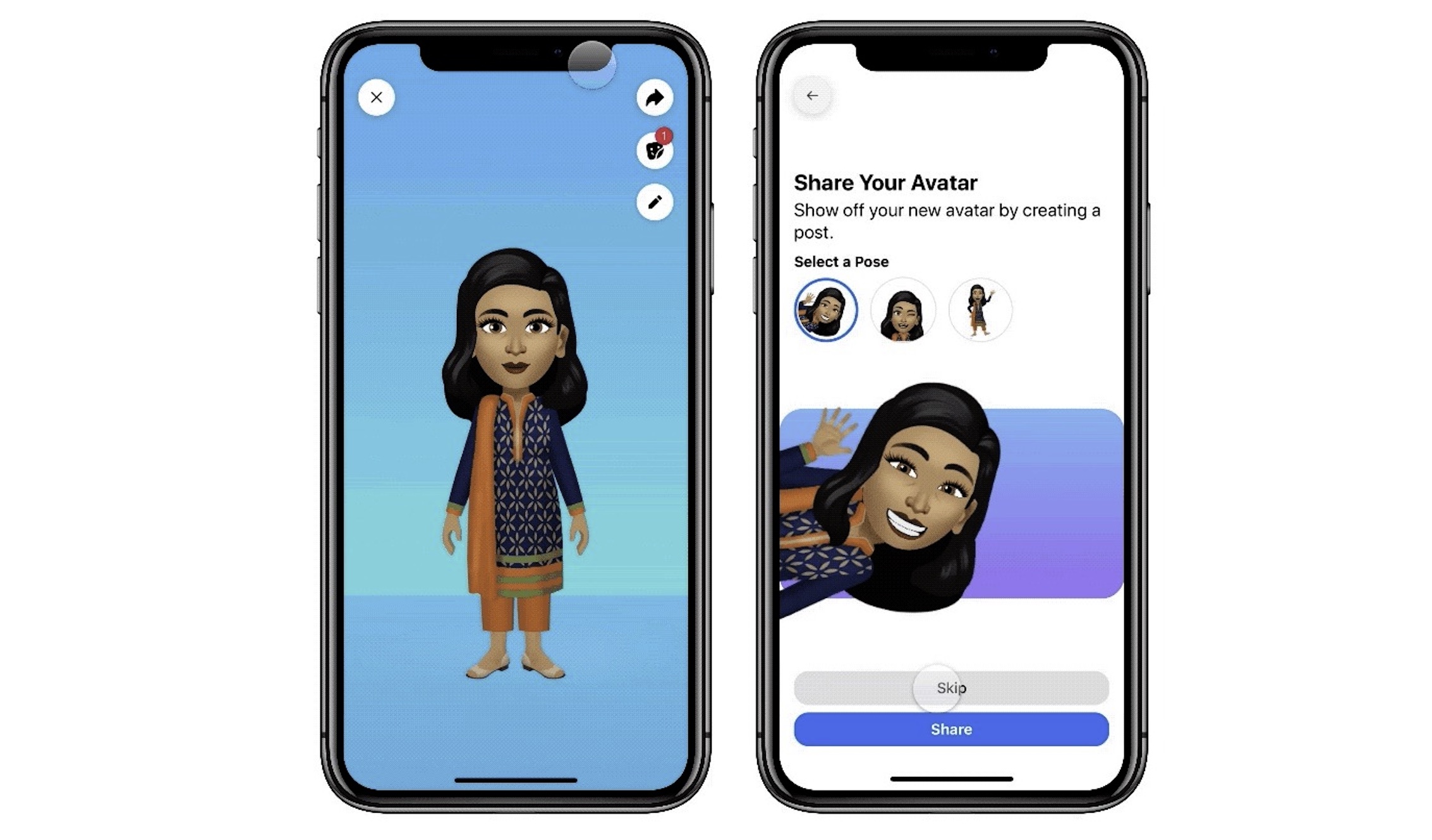
The social giant’s Avatars, a clone of Snapchat’s popular Bitmoji, was first unveiled last year. The feature, which Facebook sees as an expression tool, aims at turning engagements on the social service fun, youthful, visually communicative, and “more light-hearted.”

Users can create their avatar from the sticker tray in the comment section of a News Feed post or in Messenger. Facebook has expanded Avatars, initially available to users in Australia and New Zealand, to Europe and the U.S. in recent weeks.

Scores of companies including Chinese smartphone maker Xiaomi have attempted to replicate Bitmoji in recent years — though no one has expanded it like Snapchat.

Earlier this year, Snapchat introduced Bitmoji TV, a series of 4-minute comedy cartoons with users’ avatars. At the time, Snapchat said that about 70% of its daily active users, or 147 million of its 210 million users, had created their own Bitmojis.

Snapchat is preparing to launch the Spectacles, its AR glasses, in India. The California-headquartered firm has so far struggled to gain ground in India, where it had about 30 million monthly active users last month, according to mobile insights firm App Annie, data of which an industry executive shared with TechCrunch. Facebook has amassed over 350 million users in India and its instant messaging service WhatsApp has more than 400 million users in the country.

Comments

Popular posts from this blog

Uber co-founder Garrett Camp steps back from board director role

Uber co-founder Garrett Camp is relinquishing his role as a board director and switching to board observer — where he says he’ll focus on product strategy for the ride hailing giant. Camp made the announcement in a short Medium post in which he writes of his decade at Uber: “I’ve learned a lot, and realized that I’m most helpful when focused on product strategy & design, and this is where I’d like to focus going forward.” “I will continue to work with Dara [Khosrowshahi, Uber CEO] and the product and technology leadership teams to brainstorm new ideas, iterate on plans and designs, and continue to innovate at scale,” he adds. “We have a strong and diverse team in place, and I’m confident everyone will navigate well during these turbulent times.” The Canadian billionaire entrepreneur signs off by saying he’s looking forward to helping Uber “brainstorm the next big idea”. Camp hasn’t been short of ideas over his career in tech. He’s the co-founder of the web 2.0 recommendatio...

Leading VCs discuss how COVID-19 has impacted the world of digital health

In December 2019, Extra Crunch spoke to a group of investors leading the charge in health tech to discuss where they saw the most opportunity in the space leading into 2020 . At the time, respondents highlighted startups in digital therapeutics, telehealth and mental health that were improving medical practitioner efficiency or streamlining the distribution of care, amongst a variety of other digital health markets that were garnering the most attention. Where top VCs are investing in digital health In the months since, the COVID-19 crisis has debilitated national healthcare systems and the global economy. Weaknesses in healthcare systems have become clearer than ever, while startups and capital providers have struggled to operate while wide swaths of the market effectively shut down. Given significant volatility and the rapid changes seen in the worlds of healthcare, venture and startups broadly, we wanted to understand which inefficiencies might have been brought to light, w...

News-reading app Flipboard expands local coverage, including coronavirus updates, to 12 more U.S. metros

Earlier this year, personalized news aggregation app Flipboard expanded into local news . The feature brought local news, sports, real estate, weather, transportation news and more to 23 cities across the U.S. Today, Flipboard is bringing local news to 12 more U.S. metros and is adding critical coronavirus local coverage to all of the 35 supported locales. The 12 new metros include the following:  Baltimore, Charlotte, Cleveland, Detroit, Indianapolis, Nashville, Pittsburgh, Orlando, Raleigh, Salt Lake City, St. Louis, and Tampa Bay. They join the 23 cities that were already supported:  Atlanta, Austin, Boston, Chicago, Dallas, Denver, Houston, Las Vegas, Los Angeles, Miami, Minneapolis-St. Paul, New Orleans, New York City, Philadelphia, Phoenix, Portland, Sacramento, San Diego, San Francisco Bay Area, Seattle, Toronto, Vancouver and Washington, D.C. To offer local news in its app, Flipboard works with area partners, big and small, like The Plain Dealer’s Cleveland.com , ...