https://www.highperformancecpmgate.com/rgeesizw1?key=a9d7b2ab045c91688419e8e18a006621

Facebook has banned nearly 1,000 ‘militarized social movements,’ documents reveal

US-POLITICS-RACISM-PROTEST-UNREST
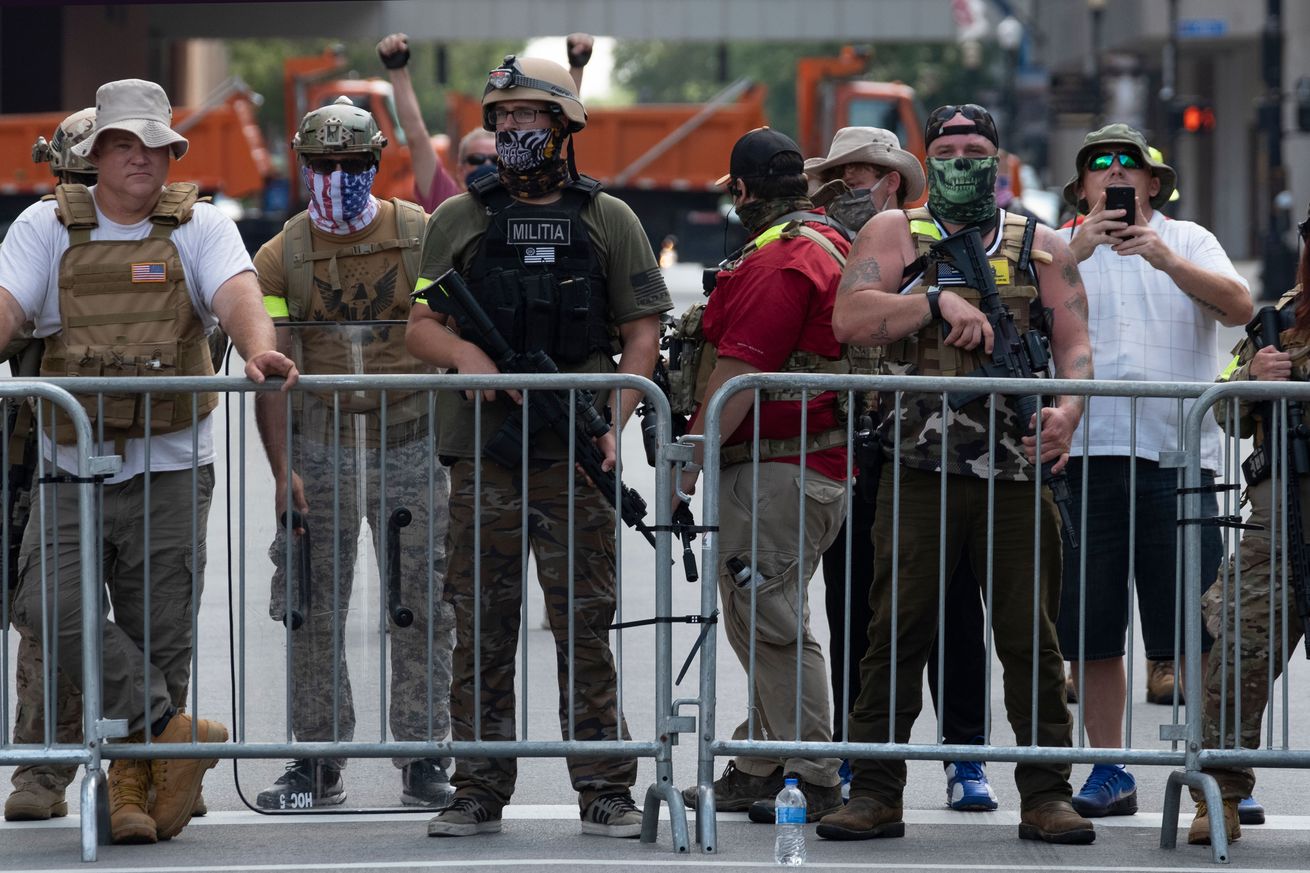
Photo by JEFF DEAN/AFP via Getty Images

Facebook has placed at least 986 groups on a private list of banned “militarized social movements,” according to internal Facebook documents published by The Intercept. The documents hint at the scale of militia organizing on Facebook — something the company cracked down on in August of 2020.

Militarized social movements are one part of Facebook’s larger “dangerous individuals and organizations” list, which The Intercept published a snapshot of in its entirety. The term refers to armed groups that promote armed conflict, as well as groups that support violence or looting at protests; in practice, it’s apparently composed largely of right-wing militias with some left-wing, anarchist, or generally anti-government organizations.

Facebook’s “dangerous individuals” list also includes white supremacist bands, hate groups like the Ku Klux Klan, and branches of Al Qaeda and other global terrorist organizations. All are banned from maintaining pages, groups, or profiles on the service. Beyond that, the categories are sorted into tiers. Tier 1 includes hate and terror groups, and Facebook users can’t express praise or support for them in any form. Tier 2 includes “violent non-state actors” like armed rebels that can only be praised for nonviolent activities. Militarized social movements are designated as Tier 3, which don’t have comparable restrictions on how users discuss them.

Facebook noted in October of 2020 that it had identified 600 militarized social movements and removed around 2,400 pages and 14,200 groups maintained by them. The company also said it had removed 1,700 pages and 5,600 groups associated with QAnon — which is designated a militarized social movement but is not an organized group.

As The Intercept notes, the group designations can be fuzzy. One subset of the violent boogaloo movement, for instance, is classified as a Tier 1 terrorist organization, while the larger movement is a militarized social movement. The designation also includes news outlets like the anarchist site It’s Going Down — which could theoretically have been grouped under the umbrella of “supporting violent acts amid protests” but is listed as an “armed militia group.”

Facebook has been criticized for both overly lax and overly punitive enforcement. But most recently, it’s come under general scrutiny for not releasing details about its operations to outside researchers or policymakers, something that makes it more difficult to evaluate its moderation strategy.

In statements to The Verge, Facebook said it had not previously released the list because publishing too many details might compromise the effectiveness of moderation.

“This is an adversarial space, so we try to be as transparent as possible while also prioritizing security, limiting legal risks, and preventing opportunities for groups to get around our rules,” said counterterrorism and dangerous organizations policy director Brian Fishman.


Comments

Popular posts from this blog

Uber co-founder Garrett Camp steps back from board director role

Uber co-founder Garrett Camp is relinquishing his role as a board director and switching to board observer — where he says he’ll focus on product strategy for the ride hailing giant. Camp made the announcement in a short Medium post in which he writes of his decade at Uber: “I’ve learned a lot, and realized that I’m most helpful when focused on product strategy & design, and this is where I’d like to focus going forward.” “I will continue to work with Dara [Khosrowshahi, Uber CEO] and the product and technology leadership teams to brainstorm new ideas, iterate on plans and designs, and continue to innovate at scale,” he adds. “We have a strong and diverse team in place, and I’m confident everyone will navigate well during these turbulent times.” The Canadian billionaire entrepreneur signs off by saying he’s looking forward to helping Uber “brainstorm the next big idea”. Camp hasn’t been short of ideas over his career in tech. He’s the co-founder of the web 2.0 recommendatio...

How the world’s largest cannabis dispensary avoids social media restrictions

Planet 13 is the world’s largest cannabis dispensary. Located in Las Vegas, blocks off the Strip, the facility is the size of a small Walmart. By design, it’s hard to miss. Planet 13 is upending the dispensary model. It’s big, loud and visitors are encouraged to photograph everything. As part of the cannabis industry, Planet 13 is heavily restricted on the type of content it can publish on Instagram, Facebook and other social media platforms. It’s not allowed to post pictures of buds or vapes on some sites. It can’t talk about pricing or product selection on others.   View this post on Instagram   A post shared by Morgan Celeste SF Blogger (@bayareabeautyblogger) on Jan 25, 2020 at 7:54pm PST Instead, Planet 13 encourages its thousands of visitors to take photos and videos. Starting with the entrance, the facility is full of surprises tailored for the ‘gram. As a business, Planet 13’s social media content is heavily restricted a...

Billionaire clothing dynasty heiress launches Everybody & Everyone to make fashion sustainable

Veronica Chou’s family has made its fortune at the forefront of the fast fashion business through investments in companies like Michael Kors and Tommy Hilfiger . But now, the heiress to an estimated $2.1 billion fortune is launching her own company, Everybody & Everyone , to prove that the fashion industry can be both environmentally sustainable and profitable. There’s no argument about the negative impacts of the fashion industry on the environment. The textiles industry primarily uses non-renewable resources — on the order of 98 million tons per year. That includes the oil to make synthetic fibers, fertilizers to grow cotton, and toxic chemicals to dye, treat, and produce the textiles used to make clothes. The greenhouse gas footprint from textiles production was roughly 1.2 billion tons of CO2 equivalent in 2015 — more than all international flights and maritime shipments combined (and a lot of those maritime shipments and international flights were hauling clothes). The lit...