https://www.highperformancecpmgate.com/rgeesizw1?key=a9d7b2ab045c91688419e8e18a006621

Halloween Kills Scene Left Judy Greer Actually Terrified

Judy Greer, one of the stars of the upcoming Halloween Kills, reveals the scene she found the most terrifying to film. The film follows-up David Gordon Green's Halloween, which retconned every film in the franchise to act as a direct sequel to John Carpenter's 1978 original. The 2018 reboot-quel saw the return of Jamie Lee Curtis as Laurie Strode, the franchise's original final girl. Greer played Karen, Laurie's daughter, alongside fellow castmates Will Patton, Andi Matichak, Nick Castle, and Toby Huss.

Halloween Kills sees the return of Curtis, Greer, and a few others, with Green once again behind the camera. The film is set to pick up moments after Halloween ended, continuing the same night of Michael Myers' murderous reign of terror. The significant shift for Greer's Karen comes from not believing in her mother's paranoia in the previous film to now having experienced Myers' return, changing the estranged dynamic between the two. That newly heightened bond will only deepen the terror in which they find themselves, both for the characters and the Halloween Kills audience.


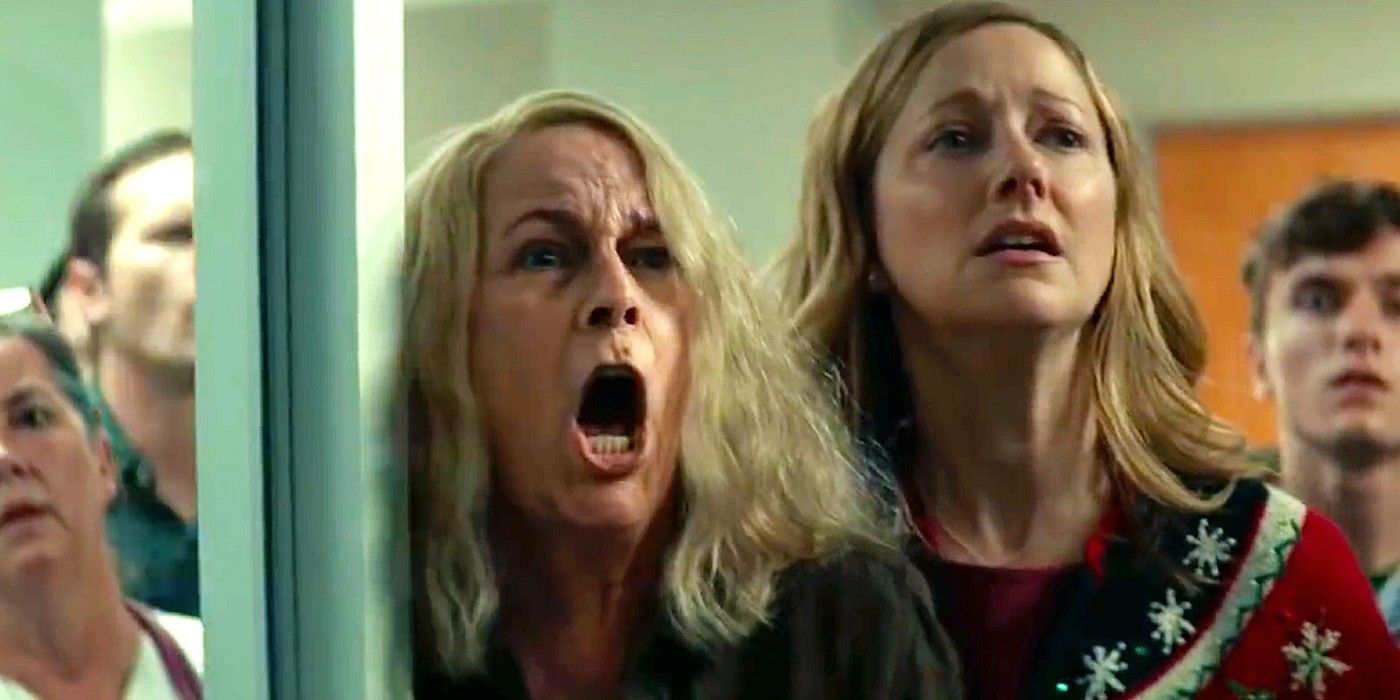
While speaking with Bloody Disgusting, Greer mentions a scene in Halloween Kills that sees Karen accompany Laurie to the hospital. Eventually, the hospital erupts into chaos, with a mob of people running and bumping into Karen and Laurie, who are pinned down in a hallway. As Greer put it, "the scariest part was for real," since even when the bedlam is choreographed, it can still be a tumultuous ordeal. Even with what she knew before filming, Greer couldn't help but feel terrified while being inches away from being trampled:

I think the scariest part was for real when we were stuck in the hallway, me and Jamie, and the mob was running after us, and they were running past us and bumping into us and shoving us and not even noticing or listening to us. It was really overwhelming and really scary. I was like, God, this is terrifying! It’s a movie, and people are acting; I can’t even imagine being in the middle of that kind of thing for real.
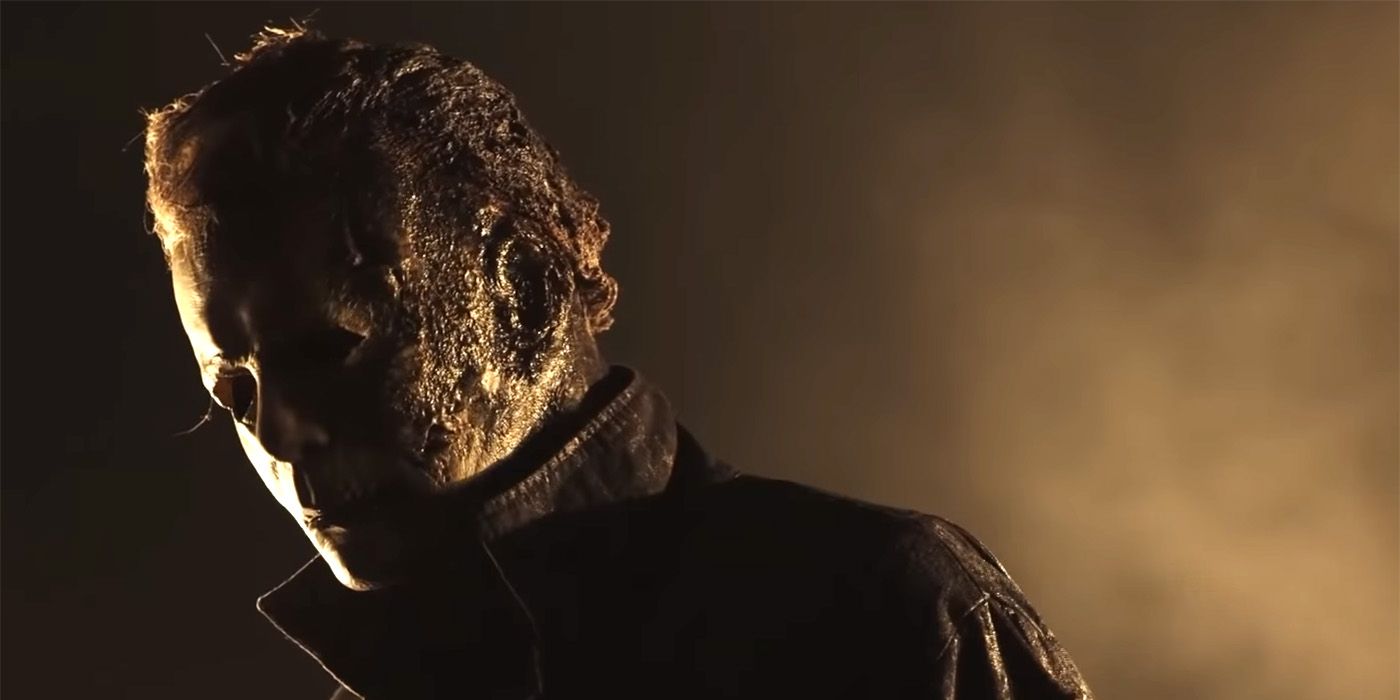


While the scene Greer mentions is full of chaos, it may not be what fans would've guessed as the most terrifying for her to film. It was clearly intense, but most would've likely expected Michael to play a more direct part in the moment. However, horror films can be just as terrifying for actors to film, and often more so in some scenes that may not be as frightening for audiences. As Greer said herself, "I can't even imagine being in the middle of that kind of thing for real."

Halloween Kills is set to have plenty of harrowing moments. A petition was even launched recently asking for the removal of a scene in Halloween Kills that features the slaughter of firefighters. While it's unlikely that the scene in question will be removed from the film, it shows that the sequel is already making waves for its intense content. It also won't be the last time audiences see Michael, as another sequel, Halloween Ends, is already planned for next year. For audiences eager to see the next horrifying chapter, Halloween Kills premieres on October 15, both in theaters and streaming on Peacock.


Source: Bloody Disgusting


Comments

Popular posts from this blog

Uber co-founder Garrett Camp steps back from board director role

Uber co-founder Garrett Camp is relinquishing his role as a board director and switching to board observer — where he says he’ll focus on product strategy for the ride hailing giant. Camp made the announcement in a short Medium post in which he writes of his decade at Uber: “I’ve learned a lot, and realized that I’m most helpful when focused on product strategy & design, and this is where I’d like to focus going forward.” “I will continue to work with Dara [Khosrowshahi, Uber CEO] and the product and technology leadership teams to brainstorm new ideas, iterate on plans and designs, and continue to innovate at scale,” he adds. “We have a strong and diverse team in place, and I’m confident everyone will navigate well during these turbulent times.” The Canadian billionaire entrepreneur signs off by saying he’s looking forward to helping Uber “brainstorm the next big idea”. Camp hasn’t been short of ideas over his career in tech. He’s the co-founder of the web 2.0 recommendatio...

How the world’s largest cannabis dispensary avoids social media restrictions

Planet 13 is the world’s largest cannabis dispensary. Located in Las Vegas, blocks off the Strip, the facility is the size of a small Walmart. By design, it’s hard to miss. Planet 13 is upending the dispensary model. It’s big, loud and visitors are encouraged to photograph everything. As part of the cannabis industry, Planet 13 is heavily restricted on the type of content it can publish on Instagram, Facebook and other social media platforms. It’s not allowed to post pictures of buds or vapes on some sites. It can’t talk about pricing or product selection on others.   View this post on Instagram   A post shared by Morgan Celeste SF Blogger (@bayareabeautyblogger) on Jan 25, 2020 at 7:54pm PST Instead, Planet 13 encourages its thousands of visitors to take photos and videos. Starting with the entrance, the facility is full of surprises tailored for the ‘gram. As a business, Planet 13’s social media content is heavily restricted a...

Billionaire clothing dynasty heiress launches Everybody & Everyone to make fashion sustainable

Veronica Chou’s family has made its fortune at the forefront of the fast fashion business through investments in companies like Michael Kors and Tommy Hilfiger . But now, the heiress to an estimated $2.1 billion fortune is launching her own company, Everybody & Everyone , to prove that the fashion industry can be both environmentally sustainable and profitable. There’s no argument about the negative impacts of the fashion industry on the environment. The textiles industry primarily uses non-renewable resources — on the order of 98 million tons per year. That includes the oil to make synthetic fibers, fertilizers to grow cotton, and toxic chemicals to dye, treat, and produce the textiles used to make clothes. The greenhouse gas footprint from textiles production was roughly 1.2 billion tons of CO2 equivalent in 2015 — more than all international flights and maritime shipments combined (and a lot of those maritime shipments and international flights were hauling clothes). The lit...